
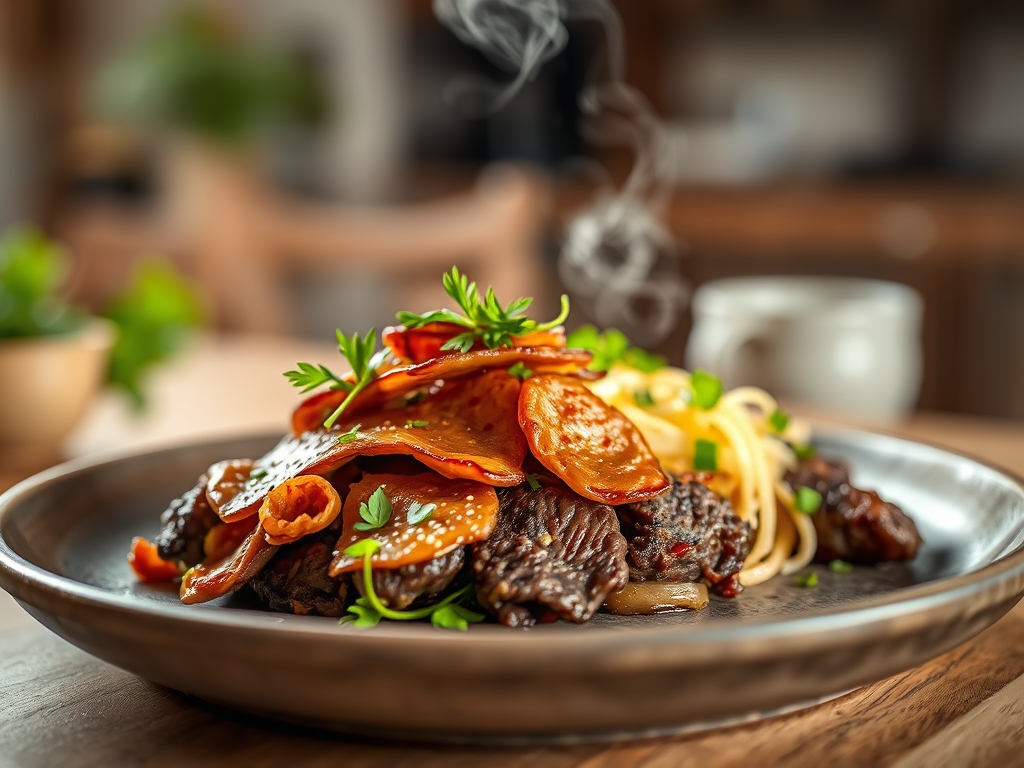
Imagine the scent of toasted butter swirling through your kitchen as a heavy-bottomed skillet begins to hum with heat. We are moving far beyond the humble mess hall origins of this dish to explore the absolute best chipped beef recipes that define modern comfort. It is about that perfect marriage of salt, fat, and silkiness. When you pull that jar of dried beef from the pantry, you are not just making breakfast; you are engaging in a culinary tradition that relies on precise chemistry to transform preserved protein into a velvety masterpiece. We are looking for that specific gloss on the gravy and the distinct, piquant snap of the beef against a pillowy canvas of toasted sourdough.
The Gathers:
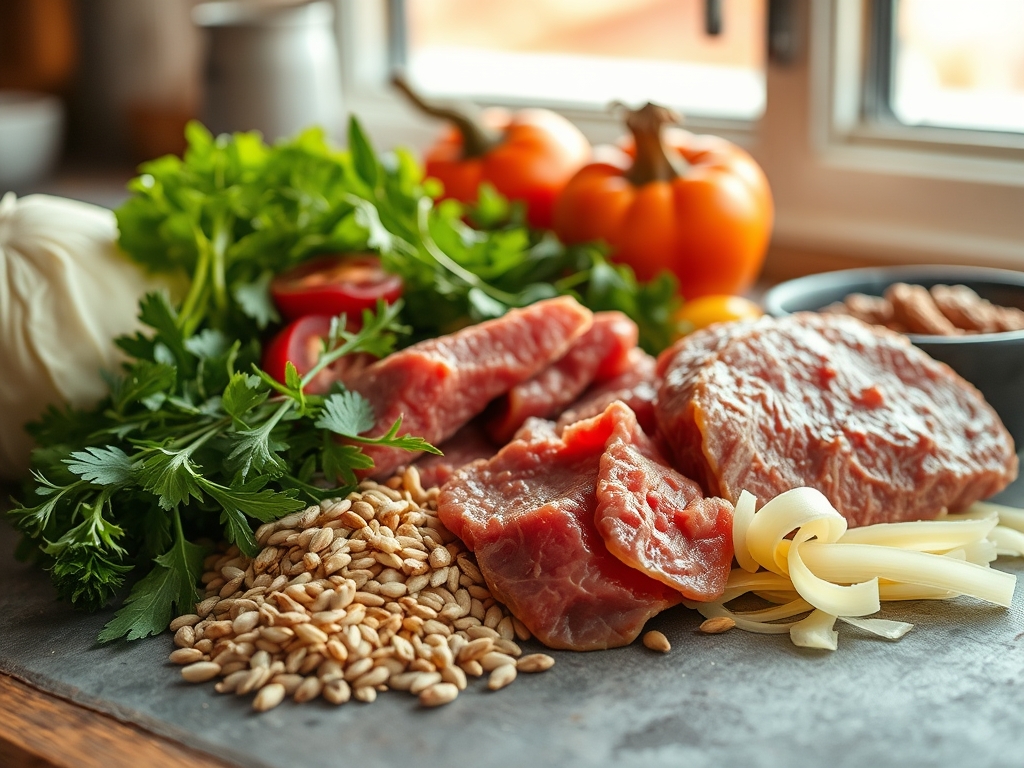
To achieve the gold standard of best chipped beef recipes, your mise-en-place must be intentional. Start with 4 ounces of high-quality dried beef. You will notice the deep mahogany hue; this is the result of curing and drying, which concentrates the umami. You will also need 4 tablespoons of unsalted European-style butter. We choose unsalted because the beef is a salt powerhouse, and European-style butter has a higher fat content and lower water percentage, which ensures a more stable emulsion.
For the base, gather 1/4 cup of all-purpose flour to create your roux. You will need 2 cups of whole milk, preferably at room temperature to prevent the fat in the roux from seizing. For the flavor profile, have your microplane ready to grate fresh nutmeg; this adds a woody, aromatic depth that cuts through the richness. A pinch of cayenne and plenty of cracked black pepper provide the necessary heat.
Smart Substitutions: If you are looking for a lighter profile, you can swap half the milk for a rich beef bone broth to intensify the savory notes. For a dairy-free alternative, use a high-fat cashew cream and a quality vegan butter stick to maintain that essential viscosity.
The Clock: 15 Minutes to Glory
The "Chef's Flow" for this dish is rapid, so do not step away from the stove. Prep takes exactly 5 minutes; this includes rinsing the beef to manage sodium levels and dicing it into uniform ribbons. The cooking phase takes 10 minutes. This is a linear process where each stage builds on the last. You spend three minutes on the roux, four minutes on the milk integration, and three minutes for the final simmer. Because we are working with a starch-thickened sauce, the timing is critical to ensure the flour taste is cooked out without scorching the milk solids.
The Masterclass:
1. The Desalination Rinse
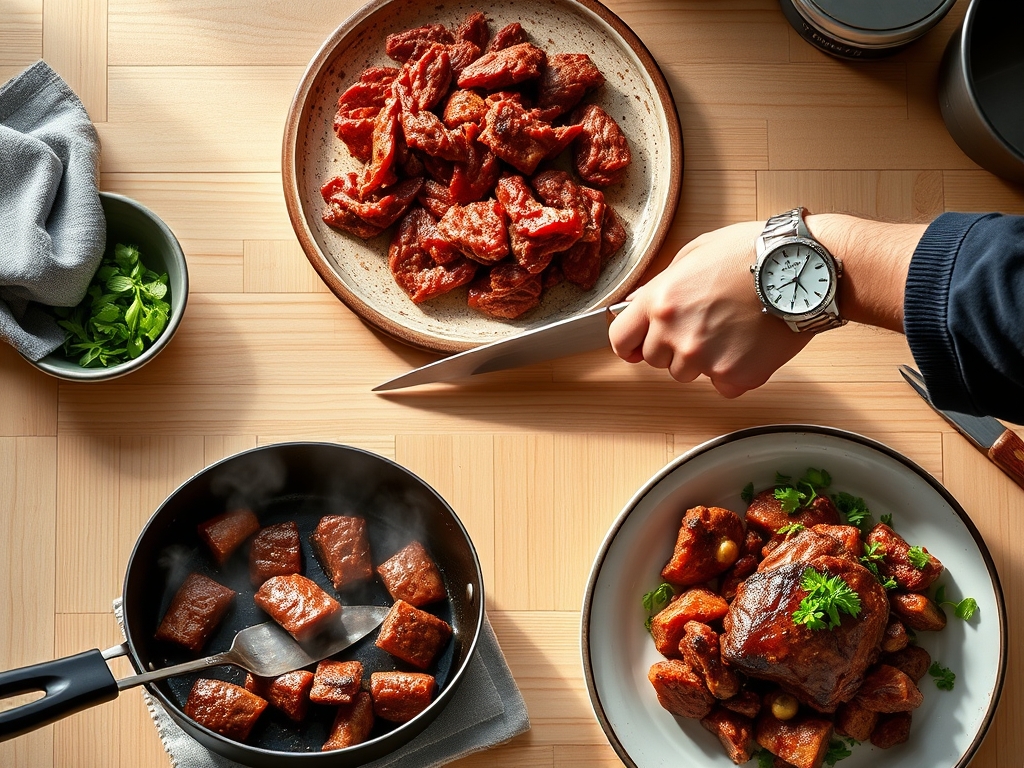
Place your beef in a fine-mesh strainer and run warm water over it for thirty seconds. Pat it bone-dry with paper towels before dicing.
Pro Tip: This step uses the principle of solubility to remove excess surface salt. If you skip this, your gravy may become hyper-saline as it reduces, ruining the balance of the dish.
2. Rendering and Toasting
Melt your butter in a saucier over medium heat. Add the beef ribbons and sauté until the edges begin to curl and slightly crisp.
Pro Tip: This triggers the Maillard reaction. By frying the beef in fat first, you create new flavor compounds and infuse the butter with a smoky, meaty essence before the flour even hits the pan.
3. The Blonde Roux
Sprinkle your flour over the beef and butter. Use a silicone whisk to stir constantly for two minutes until the mixture smells slightly nutty and looks like wet sand.
Pro Tip: This process involves dextrinization, where heat breaks down starch molecules into smaller units. Cooking the flour ensures the final sauce is smooth rather than pasty or grainy.
4. The Gradual Temper
Slowly pour in your milk, one-quarter cup at a time. Whisk vigorously after each addition until the liquid is fully incorporated before adding more.
Pro Tip: This technique manages starch gelatinization. By adding liquid slowly, you allow the starch granules to swell evenly, preventing the formation of lumps and ensuring a perfectly viscous texture.
5. The Final Infusion
Once all the milk is in, turn the heat to low. Add your nutmeg, pepper, and cayenne. Simmer for three minutes until the sauce coats the back of a spoon.
Pro Tip: We are looking for the nappe consistency. As the sauce cools slightly during plating, the viscosity will increase due to the cooling of the amylose chains, so do not over-reduce it on the stove.
The Deep Dive:
Macro Nutrition
A standard serving of chipped beef on toast provides approximately 350 calories, 18 grams of protein, and 22 grams of carbohydrates. While it is high in sodium, the protein density makes it a very satiating meal.
Dietary Swaps
- Keto: Replace the flour with a pinch of xanthan gum and use heavy cream instead of milk. Serve over roasted cauliflower steaks.
- Gluten-Free: Use a 1:1 gluten-free flour blend. These blends often contain rice flour, which provides a similar thickening power without the gluten network.
- Vegan: Use "soy curls" seasoned with liquid smoke and soy sauce as the beef replacement. Use a plant-based butter and oat milk for the cream base.
The Fix-It: 3 Common Pitfalls
- The Sauce is Lumpy: If your whisking failed, do not panic. Pass the sauce through a fine-mesh chinois or use an immersion blender to break up the flour pockets.
- It is Too Salty: If you forgot the rinse, add a splash of heavy cream or a teaspoon of sugar. The fat and sweetness will mask the salt perception on your taste buds.
- The Sauce is Too Thick: This usually happens due to evaporation. Whisk in a tablespoon of warm milk or water to loosen the proteins and restore the flow.
Meal Prep: Reheating Science
To maintain "day-one" quality, reheat your chipped beef in a small saucepan over low heat. Add a splash of milk to re-hydrate the starch. Avoid the microwave if possible, as it can cause the fat to separate from the flour, leading to an oily texture.
The Wrap-Up:
Mastering the best chipped beef recipes is a rite of passage for any home cook who loves the intersection of science and soul food. It is a dish that proves how a few humble ingredients, when treated with technical respect, can become something truly elegant. Whether you are serving this at a high-energy brunch or a quiet Tuesday morning, remember that the secret lies in the roux and the rinse. Now, grab your favorite heavy-bottomed skillet and go create some magic!
The Kitchen Table:
How do I keep my chipped beef from being too salty?
The most effective method is to rinse the dried beef in warm water for 30 seconds before dicing. This removes surface brine. Additionally, always use unsalted butter and avoid adding extra salt until the very end of the cooking process.
Can I make chipped beef gravy ahead of time?
Yes, you can store it in an airtight container for up to three days. When reheating, add a splash of milk and whisk over low heat. This restores the creamy emulsion that naturally tightens as the starch molecules cool and set.
What is the best bread for chipped beef?
A thick-cut, toasted sourdough or a sturdy brioche is ideal. You need a bread with a strong crumb structure to support the weight of the viscous gravy without becoming immediately soggy. The acidity of sourdough also cuts through the rich fat.
Why is my gravy grainy instead of smooth?
Graininess usually occurs if the flour was not cooked long enough in the butter or if the milk was added too quickly. Ensure you cook the roux for at least two minutes to fully hydrate the starch before introducing the liquid.