
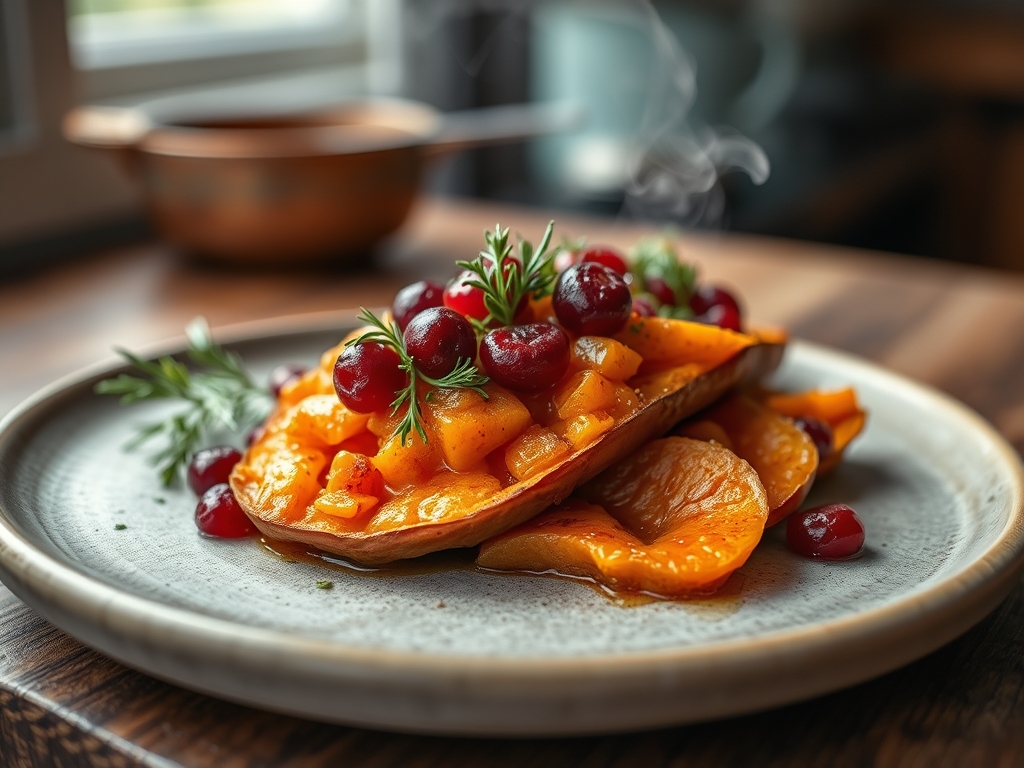
Imagine the scent of caramelized sugars swirling through your kitchen as the sharp, acidic pop of a bursting berry cuts through the earthy richness of a roasting tuber. This sensory collision is the heart of cranberry sweet potato recipes. It is a masterclass in balancing pH levels and textures; where the starchy, velvet interior of a yam meets the piquant brightness of a ruby-red fruit.
The magic happens when we move beyond the basic holiday side dish and treat these ingredients like the culinary powerhouses they are. We are talking about deep browning, structural integrity, and the kind of flavor profiles that make people stop mid-conversation to ask for your secrets. Whether you are aiming for a silky puree or a charred, crispy roast, understanding the molecular dance between these two ingredients is the key to elevating your table from standard to spectacular.
The Gathers:
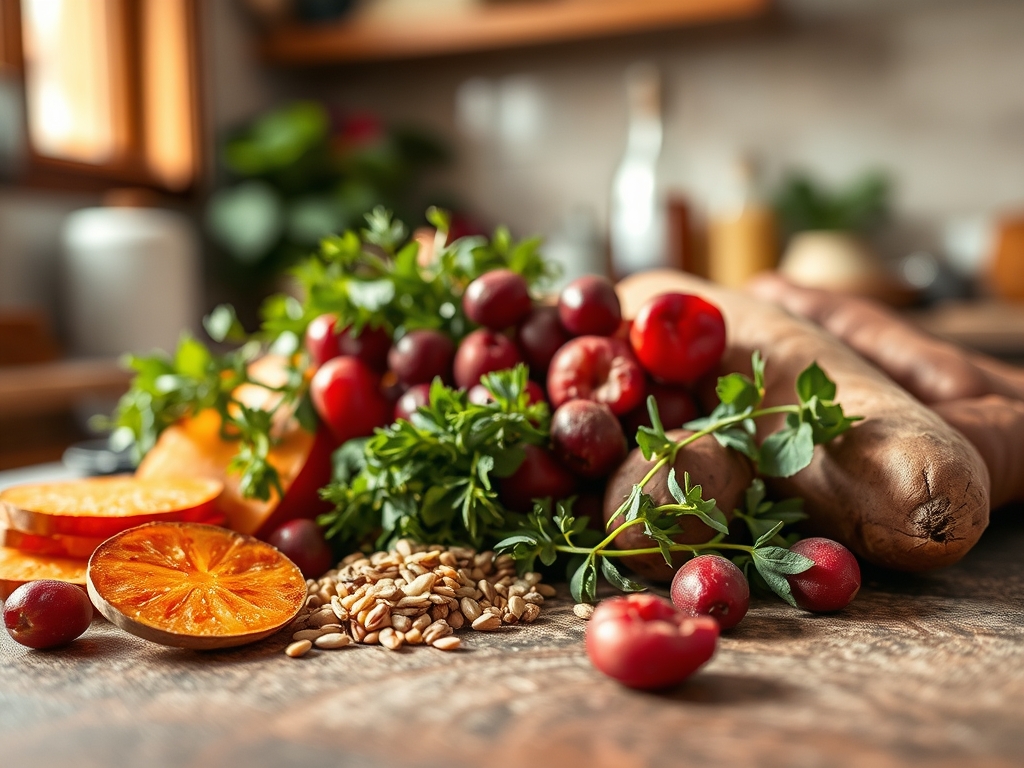
Setting your stage requires more than just grabbing a bag of produce. For the ultimate cranberry sweet potato recipes, you need to curate your mise-en-place with precision. Start with your base: Beauregard or Jewel sweet potatoes. These varieties contain high levels of amylase, an enzyme that breaks down complex starches into maltose during the roasting process. You will also need fresh, whole cranberries. Look for berries that are taut and shiny; if they bounce when dropped, their pectin levels are high, which is essential for creating a naturally viscous glaze.
Your secondary players include a high-quality fat, such as grass-fed butter or cold-pressed avocado oil, to carry fat-soluble vitamins. To round out the flavor, gather aromatic rosemary, a pinch of flaky sea salt to disrupt the sweetness, and a touch of maple syrup to encourage the Maillard reaction. Use a digital scale to measure your ingredients by weight rather than volume for consistent results every single time.
Smart Substitutions:
If you cannot find fresh cranberries, frozen ones are a superior substitute over dried versions because they retain their moisture and acidity. For a vegan twist, swap butter for refined coconut oil; it provides a similar saturated fat structure without the coconut flavor. If you want to lower the glycemic index, replace half the sweet potatoes with roasted butternut squash, which offers a similar texture with fewer carbohydrates.
The Clock: Timing the Chef's Flow
Efficiency in the kitchen is about managing your "Chef's Flow." For these cranberry sweet potato recipes, expect a total commitment of 60 minutes. Your active prep time is a brisk 15 minutes, focusing on uniform knife work with a sharp chef's knife or a bench scraper to move your produce. The roasting or simmering phase takes 40 to 45 minutes, depending on the density of your tubers.
The final 5 minutes are reserved for the "Rest and Garnish" phase. This is not just fluff; allowing the dish to sit for a few minutes allows the internal steam to redistribute, preventing the potatoes from becoming soggy when served. By staggering your tasks, you can have your saucier reducing the cranberry glaze while the potatoes are achieving their final crisp in the oven.
The Masterclass: Crafting Perfection
1. Precision Slicing and Surface Area
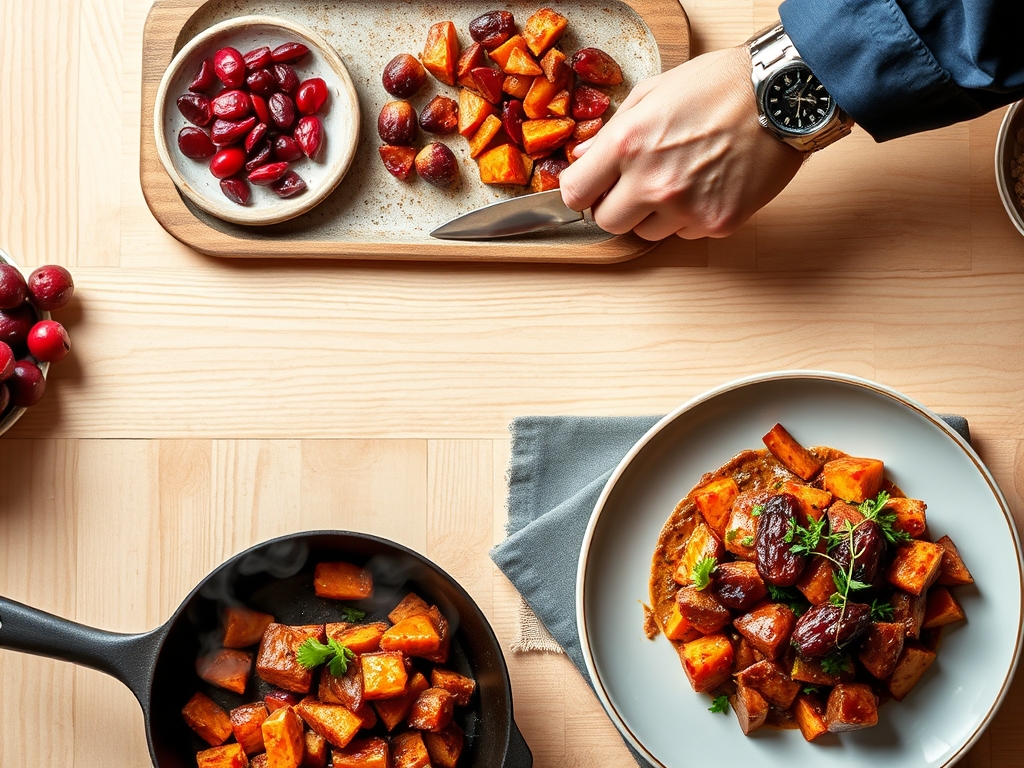
Begin by peeling and cubing your sweet potatoes into uniform one-inch pieces. Consistency is not just about aesthetics; it ensures that every piece reaches the same internal temperature at the same time. Use a bench scraper to clear your board and transfer the cubes to a large mixing bowl.
Pro Tip: This step prevents enzymatic browning. By working quickly and tossing the cut potatoes in a light coating of oil or acid, you inhibit the polyphenol oxidase from reacting with oxygen, keeping the flesh vibrant orange.
2. The Initial Sear and Fat Infusion
Heat a heavy-bottomed skillet or a large sheet pan. Toss the potatoes with your chosen fat and salt. Ensure they are in a single layer with space between them. If you crowd the pan, the moisture escaping the potatoes will create steam, resulting in a mushy texture rather than a crisp exterior.
Pro Tip: Utilize thermal carryover. If you pull the potatoes out when they look "perfect," they will overcook on the counter. Remove them when they are just shy of your desired tenderness; the residual heat will finish the job.
3. The Cranberry Integration
Add your fresh cranberries during the last 15 minutes of roasting. This timing is critical. Cranberries contain high amounts of water; adding them too early will flood the pan with liquid, ruining your potato sear. You want them to reach the point where the skins just begin to render and pop.
Pro Tip: This is where pectin release occurs. As the berries burst, they release natural thickeners that bind with the oils and sugars on the pan, creating a self-plating glaze that clings to the potatoes.
4. Deglazing and Aeration
Once the roasting is complete, use a splash of orange juice or balsamic vinegar to deglaze the pan. Use tongs to gently toss the mixture, ensuring every crevice of the potato is coated in the tart cranberry reduction.
Pro Tip: For a lighter mouthfeel, you can aerate the dish by folding in fresh herbs at the very end. The volatile oils in rosemary or thyme are heat-sensitive; adding them too early destroys their complex aromatic profile.
The Deep Dive: Science and Solutions
From a macro nutrition perspective, cranberry sweet potato recipes are a powerhouse of Vitamin A and fiber. A standard serving provides over 100 percent of your daily beta-carotene needs. To keep it Keto-friendly, minimize the maple syrup and increase the ratio of cranberries to potatoes, as berries are lower in net carbs. For a Gluten-Free guarantee, simply ensure your spices and thickeners are certified, though these whole-food ingredients are naturally GF.
The Fix-It: Common Pitfalls
- Soggy Potatoes: This usually happens due to overcrowding. Fix it by spreading the ingredients across two pans or using a wire rack to allow air circulation.
- Bitter Cranberries: If the tartness is overwhelming, do not just add sugar. Add a pinch of salt; sodium suppresses bitter receptors on the tongue, making the fruit taste sweeter without extra calories.
- Burnt Glaze: Sugars burn at 350 degrees Fahrenheit. If your oven runs hot, tent the pan with foil during the final ten minutes to protect the delicate sugars.
Meal Prep and Reheating:
To maintain "day-one" quality, avoid the microwave. The microwave vibrates water molecules, which turns the starch into a gummy mess. Instead, reheat in a 350-degree oven for 10 minutes. This restores the crisp exterior through re-gelatinization of the surface starches.
The Wrap-Up: Your New Signature Side
There is something profoundly satisfying about mastering cranberry sweet potato recipes. You are not just tossing things in a pan; you are balancing acids, managing sugars, and controlling thermal energy. This dish is vibrant, sophisticated, and incredibly versatile. It works just as well alongside a Tuesday night roasted chicken as it does as the centerpiece of a festive holiday spread. Now, grab your microplane, zest a little orange over the top, and watch your guests marvel at the professional-grade depth you have achieved.
The Kitchen Table: FAQ
How do I prevent my sweet potatoes from getting mushy?
Avoid overcrowding the pan and ensure your oven is fully preheated to at least 400 degrees Fahrenheit. High heat triggers the Maillard reaction quickly, creating a structural crust before the interior starches break down too much.
Can I use canned cranberry sauce for these recipes?
It is not recommended for roasting. Canned sauce has a high water content and processed sugars that burn easily. Stick to fresh or frozen whole berries to maintain texture and achieve a sophisticated, tart flavor profile.
What is the best way to store leftovers?
Store in an airtight glass container for up to four days. Glass is non-reactive, so the acidity of the cranberries won't pick up a metallic taste. Reheat in an oven or air fryer to maintain the desired texture.
Why are my cranberries not popping in the oven?
Your oven temperature may be too low, or the berries may be too old and lost their internal moisture. Ensure your oven is at 400 degrees; the internal steam pressure must build quickly to rupture the skin.