
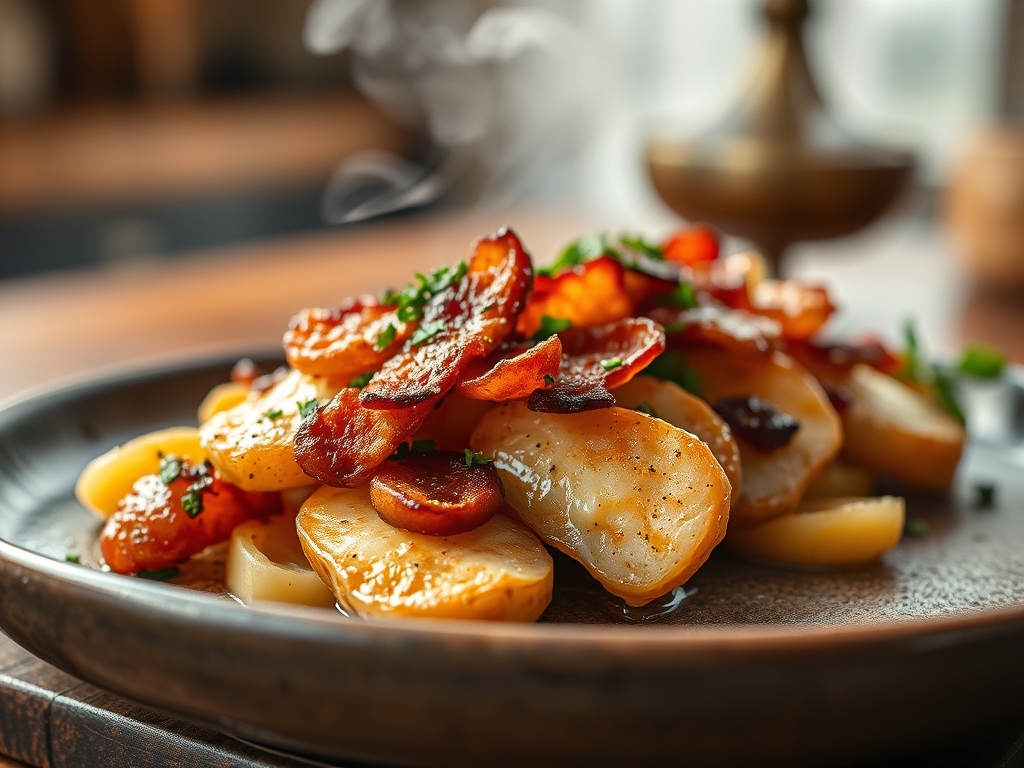
Imagine the sharp, salty snap of hickory-smoked fat shattering against a backdrop of velvet-soft starch. When you master chicken bacon potato recipes, you are not just making dinner; you are conducting a symphony of textures. The chicken provides the lean, savory protein base while the bacon acts as a self-basting mechanism, infusing every crevice of the potatoes with rendered lipids. This is the ultimate comfort trinity. It relies on the chemical interplay between animal fats and root vegetable sugars to create a meal that feels both indulgent and scientifically balanced.
We are diving into seven distinct variations of this classic roast, ranging from garlic-herb infusions to piquant balsamic glazes. Whether you are using a heavy-bottomed skillet for a stovetop finish or a wide sheet pan to maximize surface area for browning, the goal remains the same: achieving the perfect Maillard reaction. This chemical process occurs when amino acids and reducing sugars meet high heat, resulting in that deep, golden-brown crust and complex aroma that makes your kitchen smell like a five-star bistro. Grab your favorite apron and a glass of wine; we are about to turn these humble ingredients into a culinary masterpiece.
The Gathers:
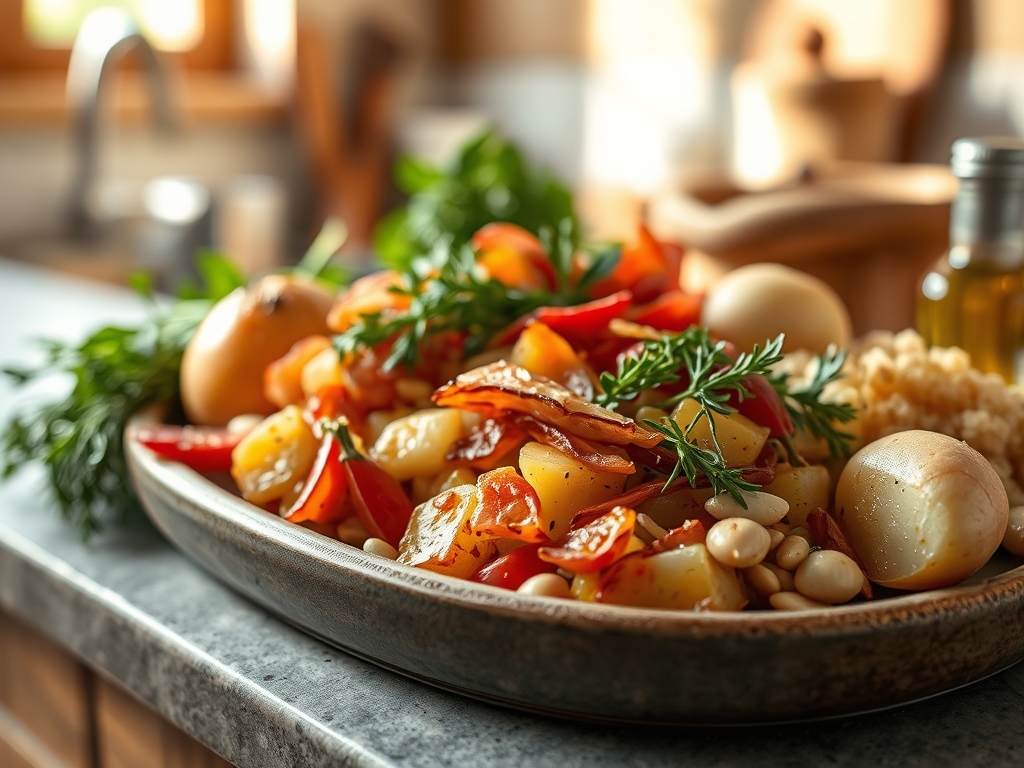
To execute these chicken bacon potato recipes with precision, your mise-en-place must be flawless. Start with your protein: six to eight skin-on, bone-in chicken thighs. The bone acts as a thermal conductor, ensuring the meat stays moist while the skin provides the surface area for crisping. For the bacon, opt for a thick-cut, dry-cured variety. Unlike cheap, water-injected brands, dry-cured bacon won't steam your potatoes; it will render pure, viscous fat that fries the vegetables in place.
For the starch, look for waxy varieties like Yukon Golds or red-skinned potatoes. These have a lower starch-to-moisture ratio, allowing them to hold their shape during long roasting periods rather than disintegrating into a mash. You will also need aromatics: a whole head of garlic, fresh rosemary sprigs, and perhaps a shallot or two for a delicate, piquant finish. Use a digital scale to ensure your ratios are exact, as too much potato will crowd the pan and prevent proper aeration.
Smart Substitutions:
If you are looking to lighten the profile, swap the chicken thighs for breasts, but wrap them tightly in the bacon to prevent desiccation. For a lower-glycemic option, par-boiled cauliflower florets can replace the potatoes, though they require a shorter roasting time. If you lack fresh herbs, a high-quality dry poultry seasoning applied with a microplane to break down any large clusters will suffice.
The Clock
Efficiency in the kitchen is about "Chef's Flow," the art of overlapping tasks to minimize downtime. Total preparation time for these roasts is approximately 20 minutes, with a total cook time of 45 to 55 minutes.
The flow begins with the oven preheating to 425 degrees Fahrenheit. While the air oscillates, you perform your knife work. Use a bench scraper to quickly clear your board of chopped potatoes and aromatics. The first 15 minutes of roasting are dedicated to rendering the bacon fat and starting the chicken. The final 30 minutes allow the potatoes to absorb the drippings and crisp up. This staggered entry ensures that the chicken reaches an internal temperature of 165 degrees Fahrenheit at the exact moment the potatoes achieve a glass-like exterior.
The Masterclass
1. Prep and Season the Components
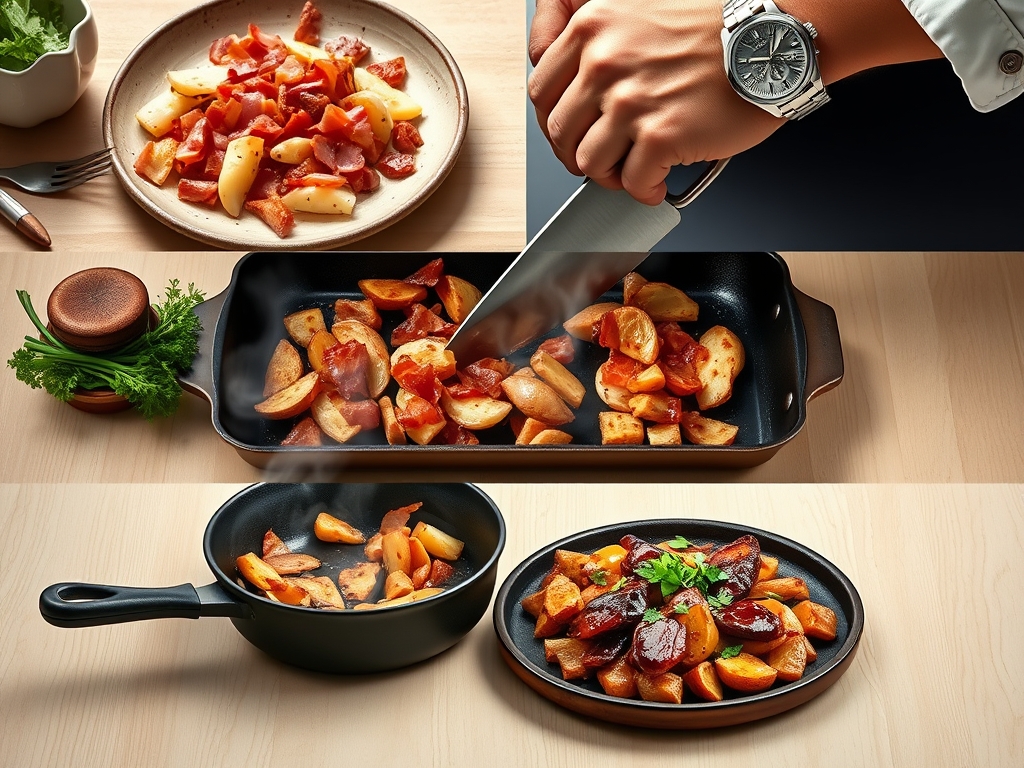
Begin by patting your chicken dry with paper towels. Moisture is the enemy of the Maillard reaction; any surface water will turn to steam and prevent browning. Season aggressively with kosher salt and cracked black pepper. Cut your potatoes into uniform 1-inch cubes to ensure even heat distribution.
Pro Tip: This is known as hygroscopic seasoning. Salt draws moisture to the surface of the meat, which then dissolves the salt into a brine that is reabsorbed, seasoning the chicken deeply to the bone.
2. Render the Bacon
Place your bacon lardons in a cold heavy-bottomed skillet or roasting pan before turning on the heat. Starting with a cold pan allows the fat to render out slowly before the proteins in the meat seize up and toughen.
Pro Tip: Slow rendering prevents the bacon from burning while providing the liquid gold fat needed to emulsify with the herb juices later in the process.
3. Sear the Protein
Move the bacon to the sides of the pan and place the chicken skin-side down in the center. Use tongs to press the skin firmly against the hot surface. Sear for 5 to 7 minutes until the skin is golden and releases easily from the pan.
Pro Tip: This stage utilizes conduction heating. If the chicken sticks, the proteins have not finished bonding and browning; wait another minute and it will release naturally.
4. Integrate the Aromatics and Potatoes
Toss the potatoes, garlic cloves, and rosemary into the rendered fat surrounding the chicken. Use a saucier or a large spoon to baste the chicken with the hot fat. This ensures the flavor of the bacon and herbs permeates every layer of the dish.
Pro Tip: This is infusion. The fat-soluble compounds in the rosemary and garlic dissolve into the bacon grease, which then coats the potatoes for a more intense flavor profile.
5. The High-Heat Roast
Transfer the entire pan to the oven. The high heat will cause the water inside the potatoes to evaporate, leaving behind a concentrated starch structure that becomes incredibly crispy. Flip the potatoes once halfway through to ensure 360-degree crunch.
Pro Tip: Watch for enzymatic browning. This is the chemical reaction that gives the potatoes their color and nutty flavor as the sugars caramelize in the intense oven heat.
6. The Deglaze and Rest
Once the chicken reaches 160 degrees Fahrenheit, remove the pan from the oven. The temperature will climb to 165 degrees during the rest. If the pan juices are too thick, add a splash of white wine or chicken stock and use a wooden spoon to deglaze the brown bits (fond) from the bottom.
Pro Tip: This accounts for thermal carryover. Removing the meat slightly early prevents the muscle fibers from tightening and squeezing out all the delicious juices.
7. Final Aeration and Service
Gently toss the ingredients one last time to coat everything in the pan sauce. Serve immediately on warmed plates to maintain the structural integrity of the crispy bacon and potato skins.
Pro Tip: Aeration during the final toss helps cool the fat slightly, allowing it to cling to the food rather than pooling at the bottom of the plate.
The Deep Dive
From a nutritional standpoint, these chicken bacon potato recipes offer a robust profile of protein and complex carbohydrates. A standard serving contains approximately 35 grams of protein and 450 calories. To make this Keto-friendly, simply substitute the potatoes for radishes or turnips, which mimic the texture of a potato when roasted but have a fraction of the carbs. For a vegan version, use king oyster mushrooms in place of chicken and tempeh bacon with a generous amount of olive oil.
The Fix-It: Common Pitfalls
- Soggy Potatoes: This usually happens due to overcrowding. If the potatoes are touching, they steam instead of fry. Solution: Use a larger pan or two separate pans.
- Burnt Garlic: Adding minced garlic too early results in bitterness. Solution: Use whole, smashed cloves and remove them if they darken too quickly.
- Dry Chicken: Overcooking is the culprit. Solution: Always use a digital meat thermometer to pull the chicken at 160 degrees Fahrenheit.
Meal Prep Science:
When reheating, avoid the microwave as it turns the potato starch gummy. Instead, use an air fryer or a toaster oven at 350 degrees. This re-activates the fats and recrisps the exterior, returning the dish to its "day-one" glory.
The Wrap-Up
Mastering chicken bacon potato recipes is a rite of passage for any home cook who values flavor and technique. By understanding the science of rendering fat and the importance of the Maillard reaction, you transform a simple sheet-pan meal into a gourmet experience. These dishes are versatile, hearty, and guaranteed to impress anyone sitting at your table. Now, go forth and roast with confidence!
The Kitchen Table
How do I make the bacon extra crispy without burning the chicken?
Cut the bacon into small lardons and start them in a cold pan. This renders the fat early, allowing the bacon to crisp at the same rate the chicken reaches its safe internal temperature during the roasting phase.
Can I use frozen chicken for these recipes?
It is not recommended. Frozen chicken releases excess moisture as it thaws in the oven, which will steam your potatoes and prevent the bacon from becoming crisp. Always thaw and pat the chicken dry before starting.
What are the best potatoes for roasting with chicken?
Yukon Gold potatoes are the gold standard. They possess a naturally buttery flavor and a medium-starch content that allows for a creamy interior and a crisp, golden-brown exterior that holds up well to chicken drippings.
How do I prevent the chicken skin from sticking to the pan?
Ensure the pan and the rendered fat are hot before adding the chicken. Let the chicken sear undisturbed; it will naturally release from the surface once the proteins have browned and formed a crust.