
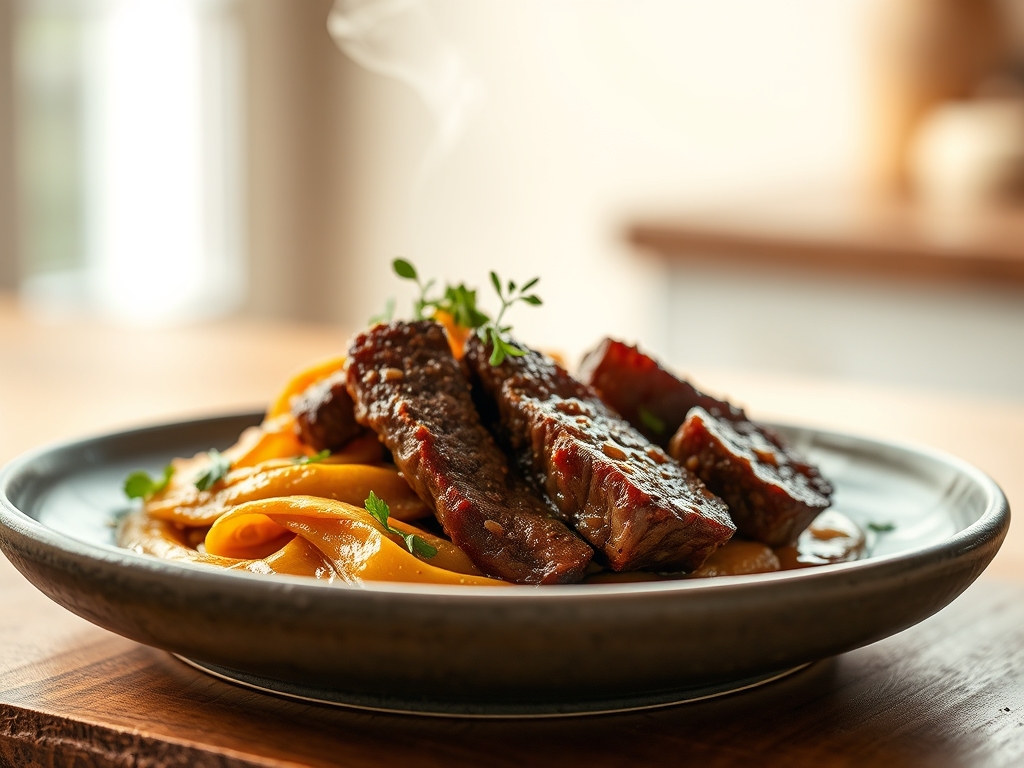
Close your eyes and listen for the sound of a crackling quebracho wood fire. If you have ever walked through the streets of San Telmo, you know that the air carries a specific, intoxicating perfume of rendered fat and charred salt. Mastering authentic argentina beef recipes is not just about heat; it is about a cultural obsession with the Maillard reaction. In Argentina, the asado is a secular religion where the beef is the deity and the griller is the high priest. We are not just searing steaks here. We are managing thermal energy to transform tough connective tissues into buttery, melt-in-your-mouth perfection.
The secret lies in the patience of the process. Unlike the high-heat, fast-sear methods of North American steakhouses, the Argentine way favors a slow, deliberate crawl toward the finish line. This allows the internal fats to liquefy and baste the muscle fibers from the inside out. You do not need a degree in thermodynamics to pull this off, but you do need to understand how salt interacts with protein structures. Grab your favorite heavy-bottomed skillet or fire up the grill; we are about to decode the DNA of the pampas.
The Gathers:
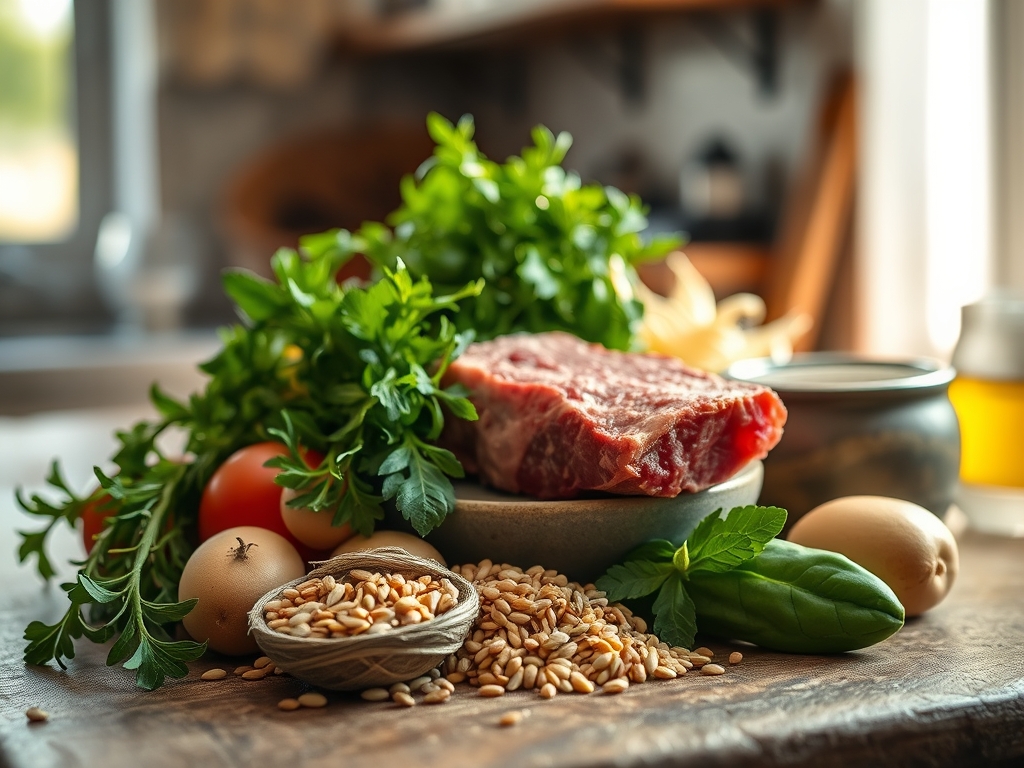
To execute these argentina beef recipes with surgical precision, your mise-en-place must be impeccable. We start with the star: a thick-cut Grass-Fed Ribeye (Ojo de Bife) or a Flank Steak (Vacio). Grass-fed beef has a higher concentration of Omega-3 fatty acids and a leaner profile, which requires a more delicate touch with heat. You will need Coarse Kosher Salt or sal parrillera. The large crystal size is vital because it dissolves slowly, creating a brine that penetrates the meat without over-salting the surface.
For the chimichurri, gather fresh flat-leaf parsley, dried oregano, and garlic. You will need a high-quality Extra Virgin Olive Oil and Red Wine Vinegar. The acidity in the vinegar acts as a chemical foil to the rich, viscous lipids in the beef. Use a Microplane for the garlic to ensure the oils are fully released, creating a piquant infusion.
Smart Substitutions: If you cannot find a traditional Vacio cut, a Tri-Tip is a fantastic structural substitute due to its similar grain pattern. For a keto-friendly version, ensure your vinegar has zero added sugars. If you are leaning toward a vegan alternative for the experience, King Oyster Mushrooms provide a fibrous texture that mimics the chew of beef when seared in a cast-iron press.
The Clock
The "Chef's Flow" for an Argentine feast is a marathon, not a sprint. Total preparation time is approximately 40 minutes, but the "inactive" time is where the magic happens. You must allow at least 30 minutes for the meat to reach Ambient Temperature before it touches the heat. This prevents the muscle fibers from seizing, which causes the juices to purge.
The cook time varies by thickness, but plan for 15 to 20 minutes of active grilling followed by a mandatory 10-minute rest. During this rest period, the internal temperature will climb by 5 to 8 degrees due to Thermal Carryover. If you rush this, you lose the moisture that makes the beef legendary.
The Masterclass
1. Tempering the Protein
Remove your beef from the refrigeration unit and pat it bone-dry with paper towels. Moisture is the enemy of the crust. By allowing the meat to sit at room temperature, you ensure that the heat energy does not have to work overtime to break the chill, allowing for more even Enzymatic Browning.
Pro Tip: Use a Digital Scale to ensure your steaks are of uniform weight. This guarantees that every piece finishes cooking at the exact same moment, preventing the "one rare, one well-done" tragedy.
2. The Salting Ritual
Apply a generous layer of coarse salt from a height of at least six inches. This ensures an even distribution. The salt draws out moisture, which then dissolves the salt into a concentrated brine that is reabsorbed into the meat via Osmosis, seasoning it to the core.
Pro Tip: Do not salt the meat more than 40 minutes before cooking unless you plan to dry-brine it for 24 hours. Anything in between can result in a "cured" texture that feels more like ham than steak.
3. Managing the Ember Bed
Whether using a grill or a Heavy-Bottomed Skillet, you want medium-high heat. You should be able to hold your hand over the heat for only 4 seconds. This temperature allows the fat to Render slowly rather than burning on the surface while the center remains raw.
Pro Tip: Avoid using lighter fluid. The volatile organic compounds in the fluid will infuse the meat with a chemical aftertaste that ruins the delicate profile of the grass-fed beef.
4. The Searing Phase
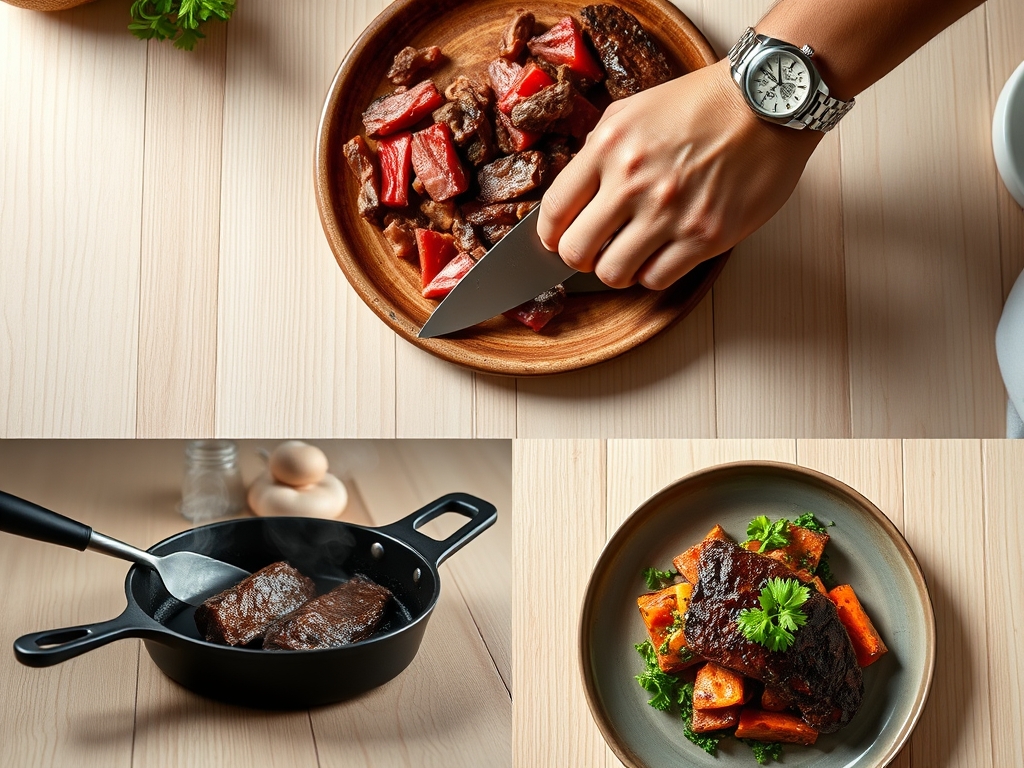
Place the beef on the heat and leave it alone. Do not poke it. Do not prod it. Use Tongs to flip it only once. This allows a thick, caramelized crust to form, known as the Maillard Reaction, where amino acids and reducing sugars create hundreds of different flavor compounds.
Pro Tip: If the fat begins to flare up, move the meat to a "cool zone" on the grill. This prevents the deposition of bitter carbon soot on your beautiful crust.
5. The Chimichurri Infusion
While the meat cooks, whisk your oil, vinegar, and herbs in a Saucier or small bowl. Do not use a blender; you want a rustic texture, not a puree. The goal is to Aerate the oil slightly while keeping the herbs intact to provide bursts of freshness.
Pro Tip: Adding a pinch of red pepper flakes provides a capsaicin kick that stimulates the palate, making the savory notes of the beef even more pronounced.
6. The Mandatory Rest
Transfer the beef to a warm wooden board. Cover it loosely with foil. This allows the protein filaments to relax and reabsorb the liquid gold (the juices). If you cut it now, the internal pressure will force all that flavor onto the cutting board.
Pro Tip: Use a Bench Scraper to collect any juices that do escape and whisk them back into your chimichurri for an extra layer of umami.
The Deep Dive
Macro Nutrition: A standard 6-ounce serving of Argentine ribeye provides approximately 450 calories, 42 grams of protein, and 32 grams of fat. It is a powerhouse of B12 and Zinc. To keep it lean, opt for the Lomo (Tenderloin) cut.
Dietary Swaps: This recipe is naturally Gluten-Free and Keto-compliant. For a Paleo approach, ensure your red wine vinegar is raw and unfiltered. For vegans, use the same chimichurri over grilled cauliflower steaks to maintain the flavor profile.
The Fix-It:
- Gray Meat: If your steak looks gray rather than brown, your pan wasn't hot enough or the meat was too wet. Fix: Pat dry and use a cast-iron skillet for better heat retention.
- Chewy Texture: You likely cut with the grain. Fix: Always slice Perpendicular to the Muscle Fibers to shorten the protein strands.
- Burnt Garlic: If your chimichurri tastes bitter, the garlic was chopped too early and oxidized. Fix: Use a microplane and mix it immediately into the acidic vinegar.
Meal Prep: To reheat, avoid the microwave at all costs. It vibrates water molecules and toughens the protein. Instead, use a low oven (250F) until the internal temperature reaches 110F. This preserves the "day-one" juicy texture.
The Wrap-Up
You are now armed with the technical prowess to dominate any backyard asado. Argentina beef recipes are less about following a rigid script and more about respecting the ingredients. When you combine high-quality protein with the science of salt and the patience of a slow sear, you create something transcendent. Go grab your tongs, find the best cut of beef in the city, and show your friends what a real steak looks like.
The Kitchen Table
What is the best cut for argentina beef recipes?
The Ojo de Bife (Ribeye) and Vacio (Flank) are the gold standards. They offer the perfect balance of intramuscular fat and robust beefy flavor required for traditional slow-grilling techniques.
Can I make chimichurri in a blender?
Technically yes, but it is discouraged. A blender emulsifies the oil and bruises the herbs, resulting in a bitter, muddy sauce. Hand-chopping preserves the distinct textures and bright, piquant flavor profile.
How do I know when the beef is done without a thermometer?
Use the "finger test" by comparing the firmness of the meat to the fleshy part of your palm. However, for total accuracy and food safety, a digital instant-read thermometer is always the superior tool.
Why is my steak tough even though it is medium-rare?
You likely skipped the resting phase or cut with the grain. Resting allows fibers to relax, while cutting against the grain mechanically breaks down the fibers, ensuring a tender bite every time.