
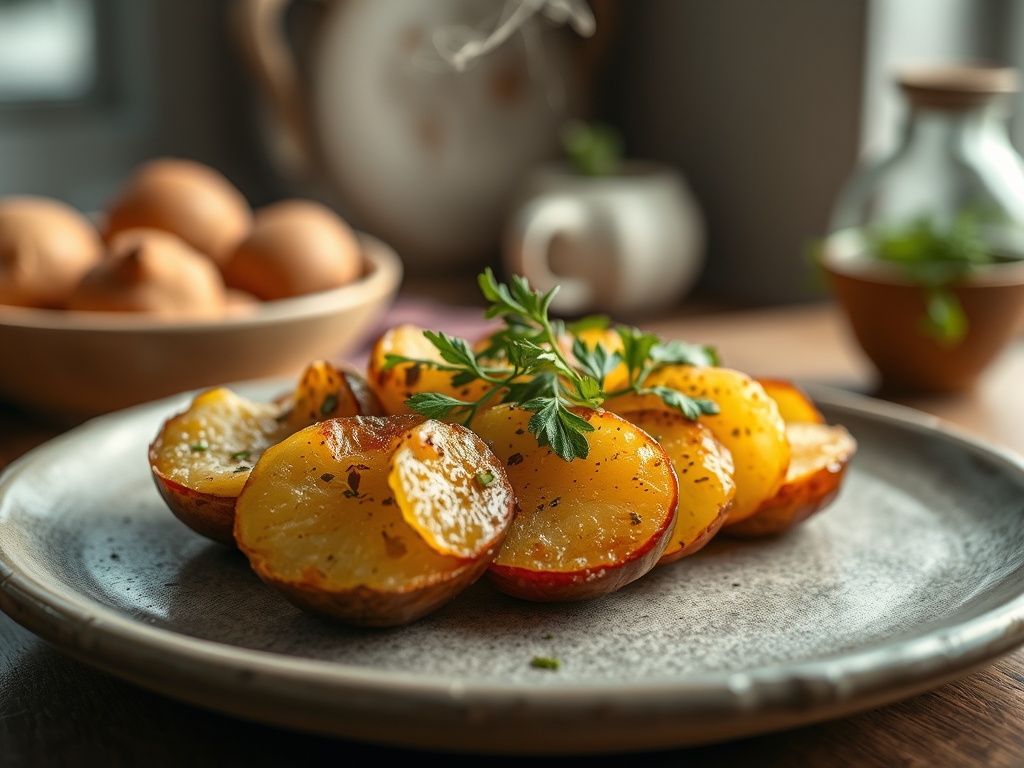
Imagine the scent of cold earth and butter hitting a hot pan. That humble brown tuber sitting in your pantry is actually a culinary shapeshifter. When you are staring at a shrinking bank account, cheap potato recipes are your secret weapon for high-end flavor on a shoestring budget. We are talking about crispy edges, velvety centers, and pure comfort.
The humble potato is a miracle of complex carbohydrates and moisture. It is the only vegetable that can act as a starch, a thickener, or a vessel for fat. Whether you are craving the crunch of a golden galette or the silkiness of a leek and potato soup, the science remains the same. We are going to manipulate starch molecules to create textures that feel expensive but cost pennies. By the time we are done, you will treat a five-pound bag of Russets like a treasure chest.
Potatoes are essentially water trapped in a lattice of starch. When we apply heat, those starch granules swell and gelatinize. This is the foundation of every great meal we are about to build. From the Maillard reaction that browns the skin to the steam that fluffs the interior, we are conducting a symphony of heat transfer. Grab your apron and your favorite heavy-bottomed skillet; we are about to turn basic groceries into a week of gourmet dining.
The Gathers:
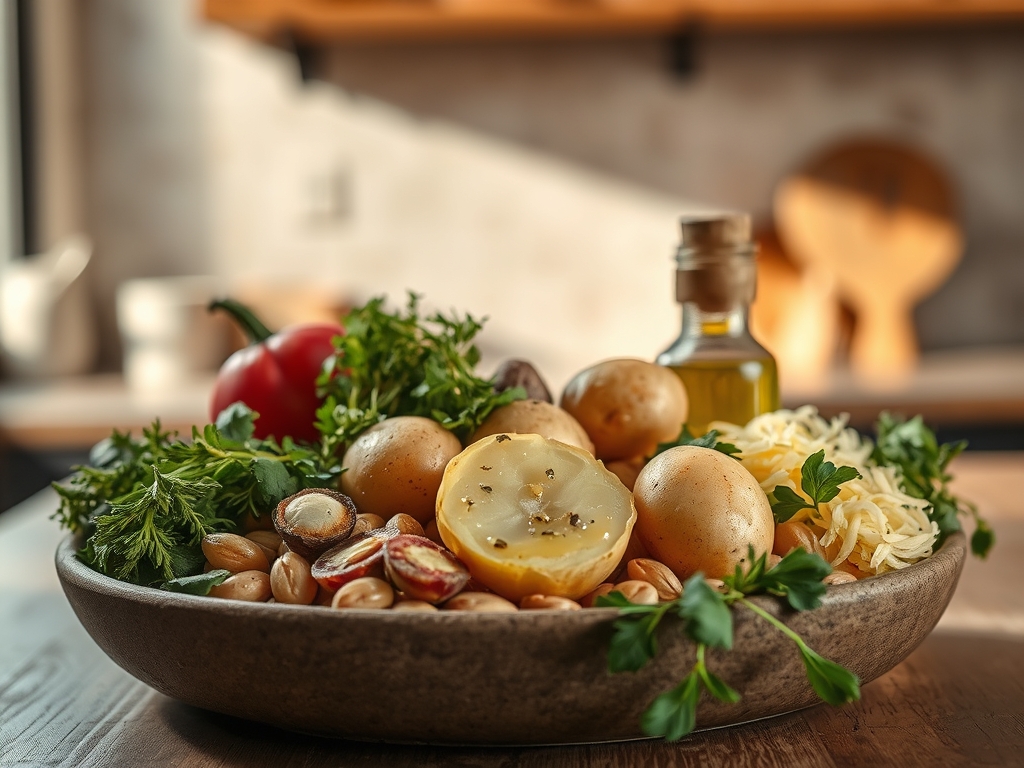
Your mise-en-place is the heartbeat of a successful kitchen. For these cheap potato recipes, we focus on the Russet and the Yukon Gold. The Russet is high in starch and low in moisture, making it the king of fluff and fry. The Yukon Gold is waxy and medium-starch, perfect for holding its shape in stews. You will also need a high-smoke-point fat like vegetable oil or rendered schmaltz to achieve that piquant, crispy exterior without burning.
Professional tools make the difference here. Reach for your bench scraper to move chopped spuds without dulling your knife. A microplane is essential for zesting citrus or grating hard cheeses to infuse maximum flavor with minimum product. You will also need a saucier for creating emulsions and a digital scale to ensure your ratios of starch to liquid are perfect.
Smart Substitutions: If you lack heavy cream, a slurry of potato starch and whole milk creates a similarly viscous mouthfeel. Out of fresh garlic? Use a pinch of garlic powder in the oil to infuse the fat before the potatoes hit the pan. If you find yourself without butter, a high-quality olive oil or even bacon grease provides the necessary lipids to carry flavor.
The Clock
Efficiency in the kitchen is about "Chef's Flow." This is the art of overlapping tasks so you are never standing still. For these six meals, prep time averages 15 minutes, while cook times range from 20 to 45 minutes. The total "active" time is minimal if you follow the sequence correctly.
Start by preheating your oven or skillet immediately. While the thermal mass builds, begin your washing and peeling. If a recipe requires boiling, get your salted water on the stove first. The time it takes for water to reach 212 degrees Fahrenheit is exactly the time you need to dice your vegetables. By syncing your prep to the heating elements, you reduce the overall time spent in the kitchen and ensure every component finishes simultaneously.
The Masterclass
1. The Crispy Smashed Potato
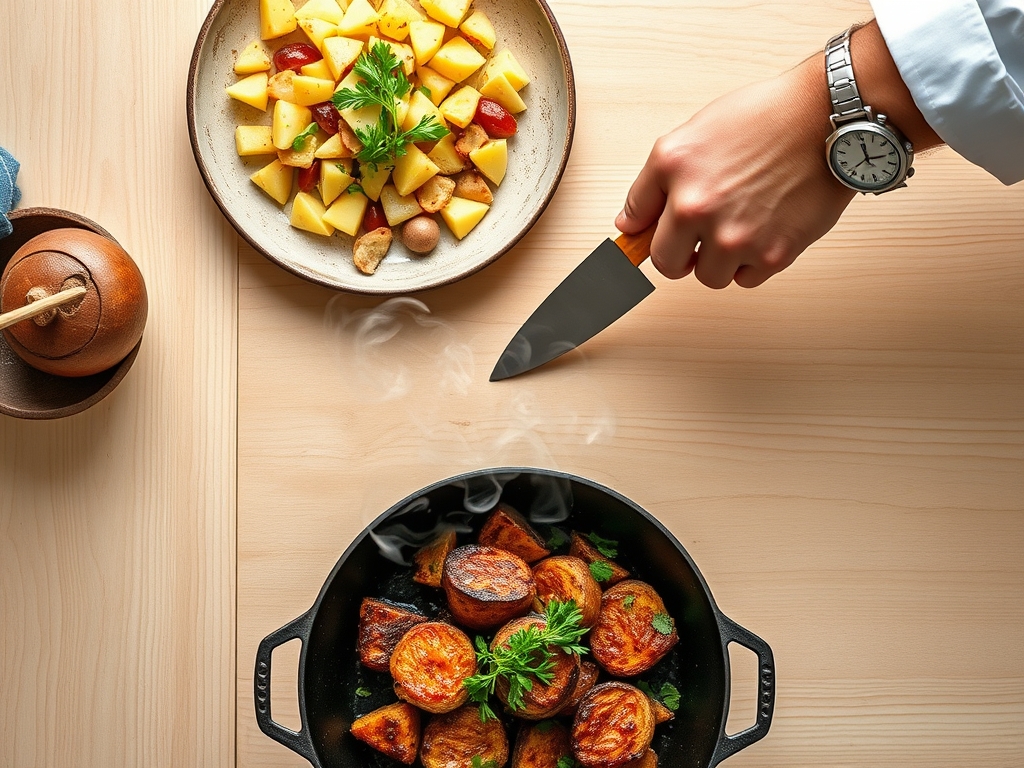
Boil small potatoes in highly salted water until fork-tender. Drain and let the steam escape. Use a heavy glass or a bench scraper to flatten them. Sear in a heavy-bottomed skillet with hot oil until a crust forms.
Pro Tip: This relies on evaporative cooling. By letting the potatoes steam-dry after boiling, you remove surface moisture. This allows the Maillard reaction to occur faster, resulting in a deeper crunch without overcooking the center.
2. The Velvety Potato Leek Soup
Sauté cleaned leeks in butter until translucent. Add diced potatoes and chicken stock. Simmer until the potatoes collapse. Use an immersion blender to aerate and emulsify the mixture into a silk-like consistency.
Pro Tip: Do not over-blend. High-speed blades can rupture starch granules too aggressively, releasing excess amylose. This turns your soup from velvety to gluey. Pulse gently to maintain a light texture.
3. The Classic Potato Hash
Dice your potatoes into uniform half-inch cubes. Heat oil in a skillet until it shimmers. Add the potatoes in a single layer and do not touch them for five minutes. Flip with tongs once the bottom is golden.
Pro Tip: This is about thermal carryover. If you crowd the pan, the temperature drops and the potatoes steam instead of sear. Give them space so the heat can circulate and create that signature crust.
4. The Hasselback Roast
Slice the potato into thin accordions, stopping just before you cut through the bottom. Brush with melted fat and herbs. Roast at 425 degrees Fahrenheit, basting every fifteen minutes.
Pro Tip: The "accordion" cut increases the surface area-to-volume ratio. This allows more of the potato to be exposed to direct dry heat, maximizing the crispy bits while the base remains tender and steamed.
5. The Potato Frittata
Thinly slice potatoes using a mandoline or sharp knife. Layer them in a skillet with whisked eggs and herbs. Cook on the stovetop until the edges set, then finish under the broiler.
Pro Tip: Potatoes are dense and take longer to cook than eggs. Par-cook your slices in the pan first to ensure they are fully softened before the eggs reach their protein coagulation point.
6. The Loaded Baked Potato Bar
Scrub large Russets and rub with oil and salt. Bake directly on the oven rack. Once soft, split them open and fluff the interior with a fork. Top with whatever leftovers are in your fridge.
Pro Tip: Salt is hygroscopic, meaning it draws moisture out. Rubbing the skin with salt before baking pulls water from the peel, resulting in a crisp, cracker-like skin that contrasts perfectly with the fluffy interior.
The Deep Dive
Potatoes are nutritionally dense, offering more potassium than a banana and a significant amount of Vitamin C. When paired with a protein or a healthy fat, they provide a balanced glycemic load that keeps you full for hours. For those on specific diets, potatoes are naturally gluten-free. For a Vegan swap, use coconut milk or nutritional yeast for creaminess. For a Keto alternative, you must limit portions, but small amounts of waxy potatoes can occasionally fit into a targeted carb-loading phase.
The Fix-It:
- Gummy Texture: This happens when you overwork the starch. Fix it by folding in a little warm liquid or butter by hand rather than using a mixer.
- Browning Too Fast: If the outside is burnt but the inside is raw, your heat is too high. Lower the flame and add a splash of water to the pan, then cover it to create steam.
- Discoloration: To prevent enzymatic browning, keep peeled potatoes submerged in cold water until you are ready to cook. This blocks oxygen from reacting with the enzymes.
Meal Prep: To reheat and maintain "day-one" quality, avoid the microwave if possible. The microwave vibrates water molecules, which can make the starch soggy. Instead, use an air fryer or a hot skillet to revive the crispy exterior through conduction.
The Wrap-Up
Mastering cheap potato recipes is about more than just saving money; it is about reclaiming your kitchen with confidence and scientific flair. When you understand how starch, heat, and fat interact, you no longer need a recipe to create something delicious. You have the tools, the techniques, and the knowledge to turn a simple root vegetable into a five-star feast. Go forth, get those pans hot, and show that bag of potatoes who is boss.
The Kitchen Table
How do I stop potatoes from sticking to the pan?
Ensure your heavy-bottomed skillet is fully preheated before adding oil. Once the oil shimmers, add the potatoes and do not move them. This allows a crust to form, which naturally releases the potato from the surface of the metal.
Can I use any potato for mashing?
Russets or Yukon Golds are best. Russets provide a light, fluffy texture due to high starch content. Yukon Golds offer a rich, buttery flavor and a creamier consistency. Avoid waxy red potatoes for mashing, as they often become gluey.
Why are my roasted potatoes soggy?
Sogginess is caused by trapped steam. Do not crowd your roasting pan; ensure there is space between each piece. Also, drying the potatoes thoroughly with a lint-free towel after washing removes surface moisture, allowing for a better sear.
How long do raw potatoes last in the pantry?
Stored in a cool, dark, and dry place, potatoes can last three to five weeks. Keep them away from onions, as onions release ethylene gas which accelerates sprouting. If they develop green spots, peel those areas away before cooking.