
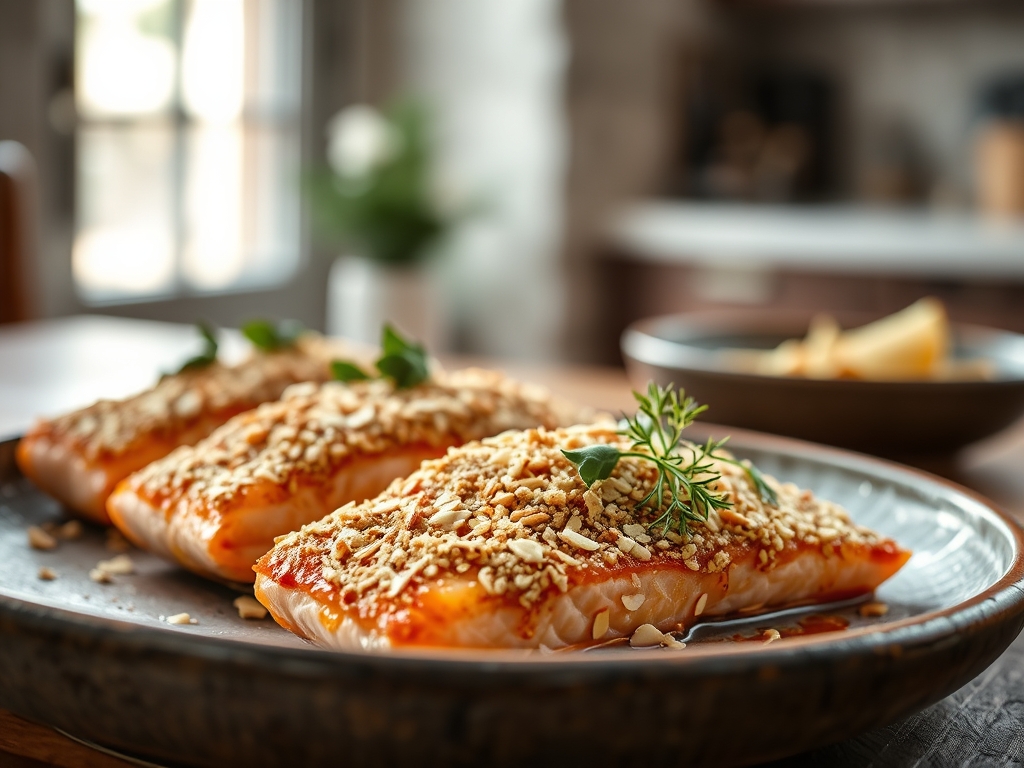
Picture the sound of a heavy-bottomed skillet meeting a flame. There is a specific, high-frequency sizzle that occurs when cold protein hits a shimmering layer of oil. It is the sound of a perfect crust forming. When you master almond crusted salmon recipes, you are not just cooking dinner; you are managing a complex series of chemical reactions that result in a buttery, flakey interior and a piquant, nutty exterior. The goal is a contrast so sharp it feels intentional. We are aiming for that golden-brown hue that signals the Maillard reaction is complete. This is the ultimate weeknight flex because it looks like a million dollars but takes less time than a standard delivery order.
To get there, we have to talk about the physics of the crust. Most people fail because their coating turns into a soggy paste. We are going to avoid that by using science to ensure the moisture stays inside the fish while the exterior undergoes rapid dehydration to achieve that signature crunch. Grab your apron and your favorite microplane; we are about to elevate your kitchen game with precision and a little bit of culinary wit.
The Gathers:
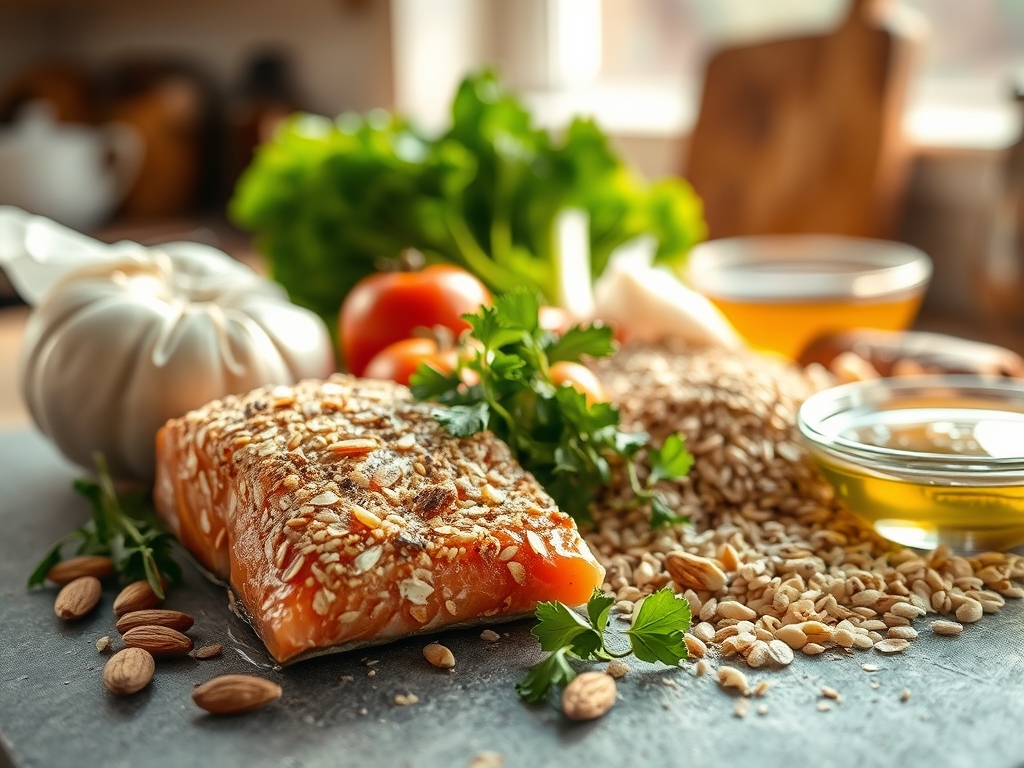
Before we ignite the burners, we must organize our mise-en-place. Precision starts with the scale. You will need 1.5 pounds of center-cut Atlantic or King salmon. Look for deep pigmentation, which indicates a high astaxanthin content. For the crust, we use sliced or slivered almonds. Avoid almond flour for the primary texture; it lacks the surface area needed for a true crunch. You will also need Dijon mustard to act as a viscous binding agent, fresh lemon zest, flat-leaf parsley, and a pinch of smoked paprika for depth.
Smart Substitutions: If you are avoiding nuts entirely, toasted pumpkin seeds (pepitas) offer a similar lipid profile and crunch. If you lack Dijon, a thick Greek yogurt mixed with a teaspoon of dry mustard powder will provide the necessary acidity and protein structure to hold the crust in place. Always use a microplane for your zest to ensure you only capture the aromatic oils in the flavedo, avoiding the bitter white pith.
The Clock:
The "Chef's Flow" is all about overlapping tasks to minimize downtime. Your total active prep time is exactly 12 minutes. The cooking phase takes 10 to 14 minutes depending on the thickness of your fillets.
- Minutes 0-5: Preheat the oven to 400 degrees Fahrenheit and pat the salmon dry. Moisture is the enemy of the sear.
- Minutes 5-10: Prepare the almond mixture and the binding agent.
- Minutes 10-12: Apply the coating and transfer to a parchment-lined baking sheet.
- Minutes 12-24: Roast until the internal temperature reaches 125 degrees Fahrenheit for a perfect medium-rare.
By the time you have rinsed your saucier and set the table, the salmon is resting. Never skip the rest phase; it allows the muscle fibers to reabsorb the rendered fats.
The Masterclass:
1. The Desiccation Phase
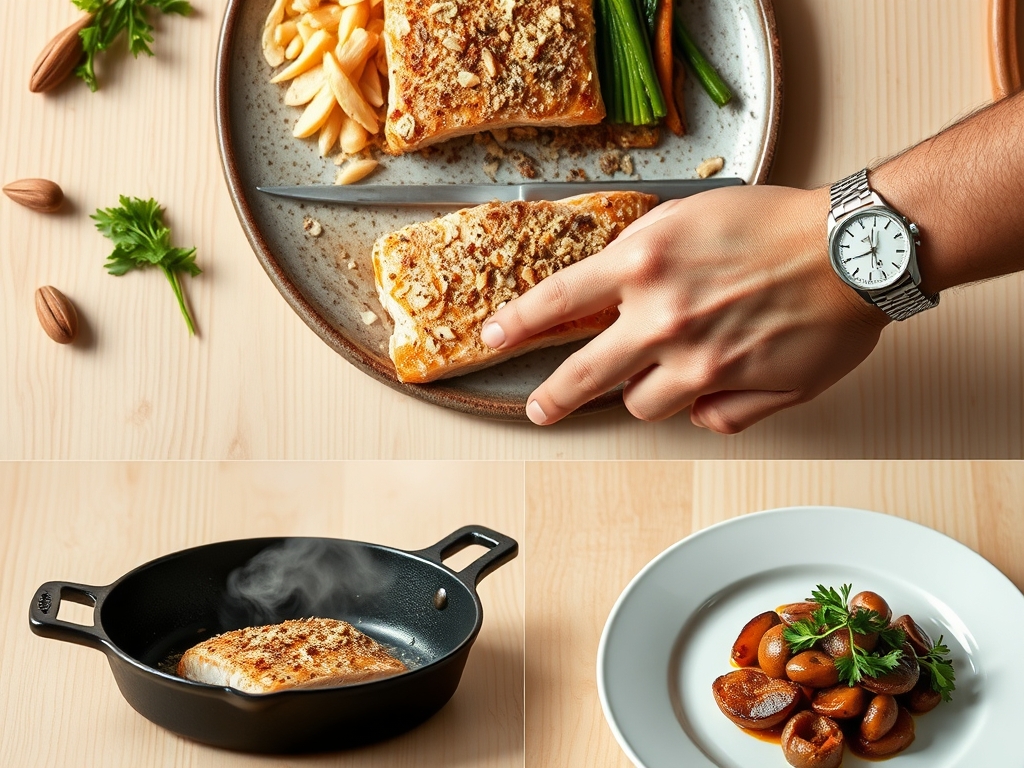
Pat the salmon fillets with paper towels until the surface is completely matte. Use a sharp chef's knife to portion the fish into even rectangles.
Pro Tip: This is about surface tension. Removing surface moisture prevents the formation of steam, which would otherwise insulate the fish and prevent the crust from adhering properly.
2. The Binding Application
Brush a thin, even layer of Dijon mustard over the top of each fillet. Do not coat the bottom skin side.
Pro Tip: The mustard acts as an emulsifier. The proteins in the mustard cross-link with the fish proteins, creating a "glue" that holds the heavy almonds during the thermal expansion of the cooking process.
3. The Almond Compression
Press the crushed almonds firmly into the mustard layer. Use the flat side of a bench scraper to ensure the nuts are packed tightly and evenly.
Pro Tip: Dense packing facilitates conductive heat transfer. When the nuts are close together, they heat uniformly, leading to even enzymatic browning across the entire surface.
4. The Thermal Blast
Place the salmon in the center of the oven. If using a convection setting, reduce the temperature by 25 degrees to account for the increased airflow.
Pro Tip: We are looking for thermal carryover. If you pull the salmon at 125 degrees, it will rise to a perfect 130 or 135 degrees while resting. Overcooking leads to the extrusion of albumin (that white gunk), which ruins the aesthetic.
The Deep Dive:
When we look at the macro profile, this dish is a powerhouse. You are getting high-quality Omega-3 fatty acids from the salmon and monounsaturated fats from the almonds. It is naturally low-carb and high-protein.
Dietary Swaps:
- Vegan: Use a thick slice of cauliflower or a firm "tofu steak" as the base. Use a vegan mayo or tahini as the binder.
- Keto/GF: This recipe is inherently keto-friendly. For gluten-free assurance, simply ensure your mustard brand does not use flour-based thickeners.
The Fix-It:
- Soggy Crust: This happens if the oven wasn't hot enough. Fix it by finishing the fish under the broiler for 60 seconds. Watch it like a hawk.
- Nuts Falling Off: You likely didn't use enough binder or didn't press them down. Next time, use the bench scraper trick.
- Dry Fish: You bypassed the internal temperature check. Always use a digital probe thermometer.
Meal Prep Science:
To reheat without turning the salmon into rubber, use the "low and slow" method. Place it in a 275-degree oven with a splash of water in the pan, covered with foil. This creates a gentle steam environment that rehydrates the proteins without over-coagulating them.
The Wrap-Up:
You now have the technical blueprint to execute one of the most reliable almond crusted salmon recipes in the culinary canon. Remember, cooking is just delicious chemistry. By controlling moisture, managing heat transfer, and respecting the resting period, you ensure a restaurant-quality result every single time. Use your tools, trust your thermometer, and don't be afraid to let those almonds get a little dark. That is where the flavor lives. Now, get into that kitchen and make something incredible!
The Kitchen Table:
How do I keep the almonds from burning?
Position your oven rack in the center, not the top. If the nuts brown too quickly before the fish is done, tent the salmon loosely with foil to reflect radiant heat while allowing the interior to finish cooking via conduction.
Can I use frozen salmon for this recipe?
Yes, but you must thaw it completely in the refrigerator first. Frozen fish releases more moisture (purge), so you must be extra diligent about patting it dry with paper towels to ensure the mustard binder adheres correctly.
What is the best way to crush the almonds?
Place them in a sealed bag and use a rolling pin to gently break them. You want a mix of small bits and larger shards. Avoid a food processor, as it often turns the nuts into a greasy meal.
Should I leave the skin on the salmon?
Keep the skin on during cooking to act as a heat shield. This prevents the delicate flesh from drying out against the hot pan. You can easily slide a spatula between the meat and skin before serving if preferred.