
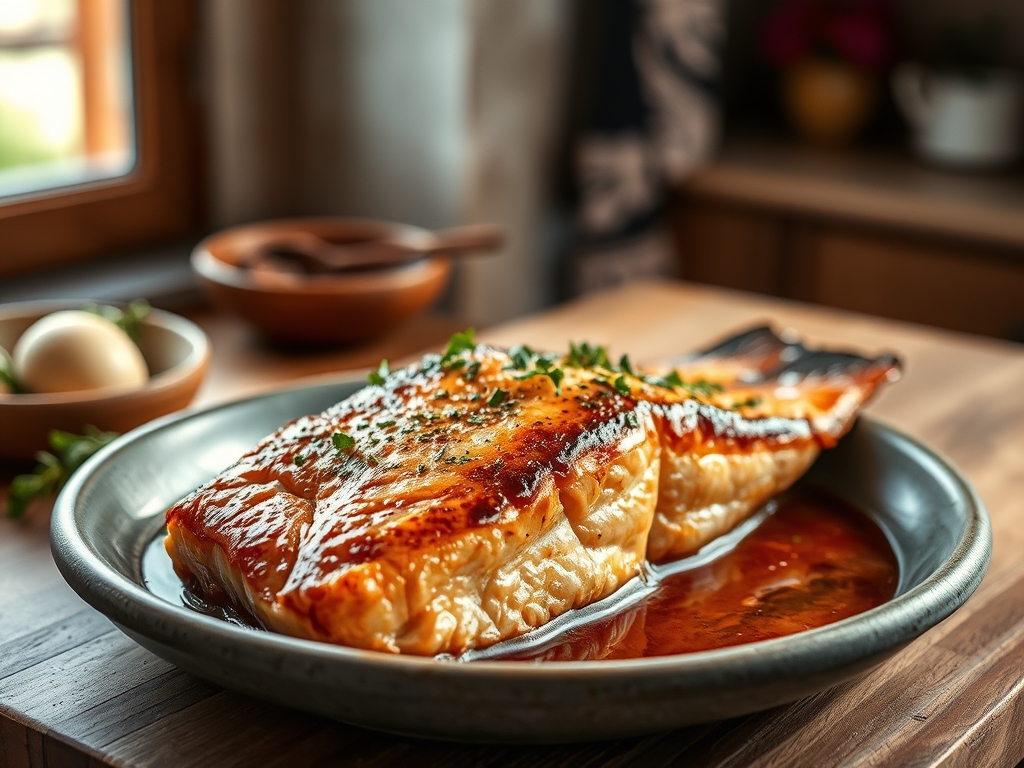
Imagine the scent of citrus-infused steam and sizzling fat wafting through your kitchen as you pull a shimmering, golden-skinned centerpiece from the oven. If you have been searching for the ultimate baked whole salmon recipes, you are likely looking for that perfect intersection of high-end culinary drama and effortless execution. Cooking a whole fish is a power move; it is the ultimate expression of hospitality that screams sophistication while actually being one of the most forgiving ways to prepare seafood. The skin acts as a natural insulator, trapping moisture and essential oils within the flesh to ensure every bite is buttery and succulent. We are moving beyond basic fillets today; we are mastering the art of the whole roast.
The Gathers:
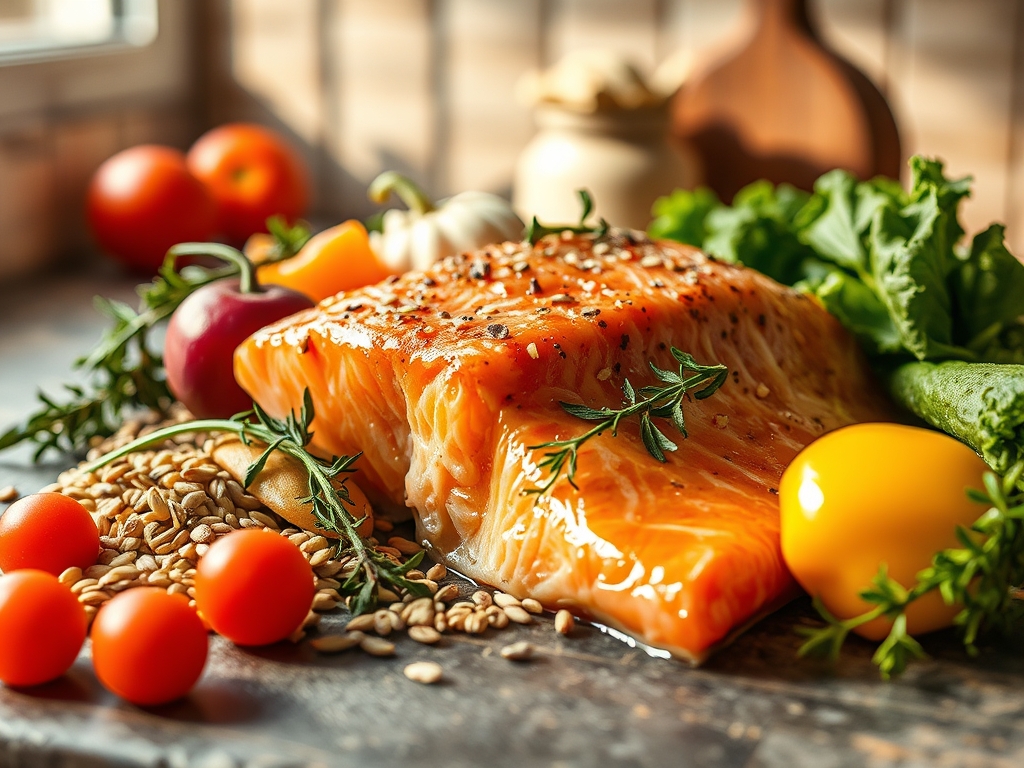
To achieve a professional-grade result, your mise-en-place must be precise. Start with a four to five pound whole salmon, cleaned and scaled. You will need high-quality fats to facilitate heat transfer; reach for a viscous extra virgin olive oil or clarified butter. For aromatics, gather fresh dill, flat-leaf parsley, and thin rounds of Meyer lemons. The piquant bite of capers and the earthy depth of fennel bulbs will provide a complex flavor profile that cuts through the rich lipids of the fish. Use a microplane to zest your citrus, ensuring you only capture the oil-rich flavedo without the bitter white pith.
Smart Substitutions: If you cannot find fresh dill, a tablespoon of dried tarragon offers a similar anise-like profile. For those avoiding dairy, replace butter with avocado oil for a high smoke point that encourages a crispier skin. If Meyer lemons are out of season, a mix of standard lemon and orange slices mimics that specific floral acidity perfectly. Always have a digital scale on hand to measure your salt; a ratio of 1.5 percent salt to the weight of the fish ensures deep seasoning without over-salting the delicate proteins.
The Clock:
The "Chef's Flow" for a whole salmon is all about thermal management. Total active preparation time is approximately 20 minutes, while the roasting process takes between 40 and 55 minutes depending on the thickness of the fish. However, the most critical phase is the 10-minute rest period post-oven.
Your workflow should look like this: spend the first 10 minutes bringing the fish to room temperature. Use this time to aerate your herb butter or slice your aromatics. The next 10 minutes are for stuffing and seasoning. Once the fish enters the oven, you have a 45-minute window to prepare side dishes or a light saucier-based reduction. By the time the salmon is resting, your kitchen is clean and your table is set. This synchronized timing prevents the fish from sitting too long and becoming chalky.
The Masterclass:
1. The Surface Preparation
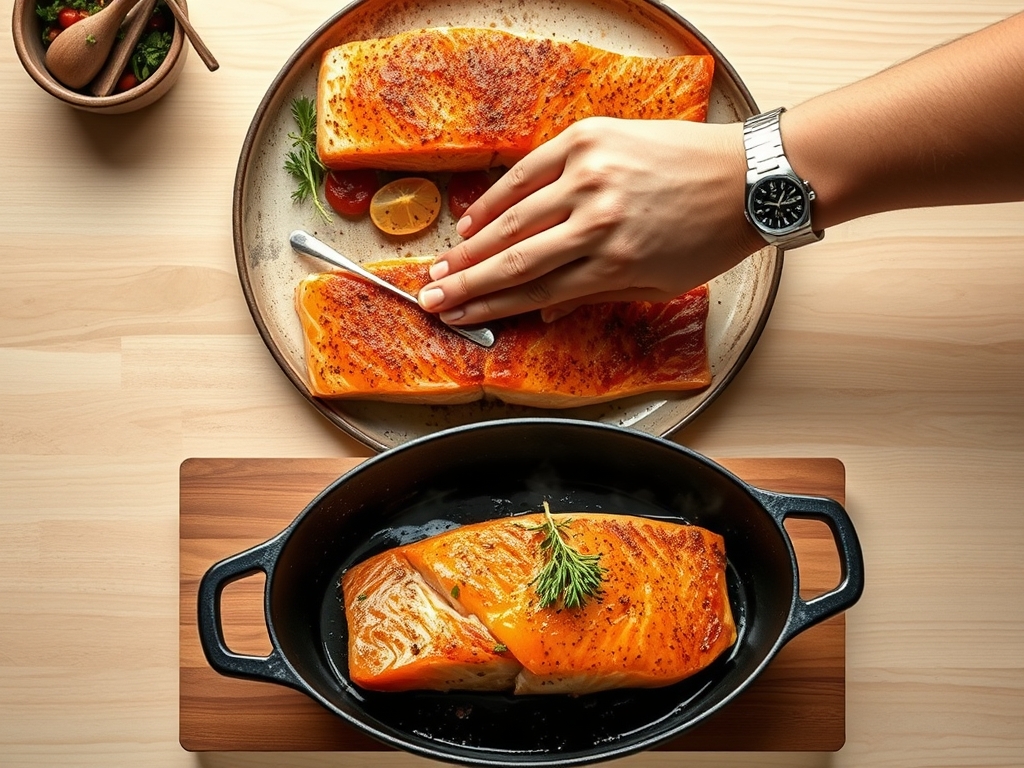
Dry the skin of the salmon thoroughly using paper towels. Moisture is the enemy of the Maillard reaction. If the skin is damp, the heat of the oven will be wasted on evaporation rather than browning. Use a sharp knife to score the skin in three-inch intervals, which prevents the fish from curling as the collagen fibers contract.
Pro Tip: This technique utilizes evaporative cooling principles. By removing surface moisture, you allow the surface temperature to rise rapidly above 212 degrees Fahrenheit, triggering the chemical reaction between amino acids and reducing sugars that creates a savory crust.
2. The Internal Infusion
Generously season the internal cavity with kosher salt and cracked black pepper. Stuff the cavity with your prepared fennel, lemon slices, and herb bundles. Use tongs to nestle the aromatics deep into the center. This creates an internal steam chamber that flavors the meat from the inside out.
Pro Tip: This is known as aromatic diffusion. As the fish heats, the essential oils in the herbs and citrus peel become volatile, permeating the flesh and neutralizing any overly "fishy" trimethylamine compounds.
3. The Lipid Barrier
Coat the exterior of the fish with your chosen fat. Use a pastry brush to ensure an even layer. This fat acts as a heat conductor, ensuring the heat from the oven air is efficiently transferred to the skin. Place the fish on a parchment-lined baking sheet or a heavy-bottomed roasting pan.
Pro Tip: This step facilitates conduction. Since air is a poor heat conductor, the thin film of oil creates a continuous medium that transfers energy more effectively, leading to uniform cooking across the varying thickness of the salmon.
4. The Precision Roast
Slide the fish into a preheated oven at 375 degrees Fahrenheit. Position the pan in the center rack to ensure even airflow. Do not open the oven door repeatedly; every time you do, the ambient temperature drops significantly, extending the cook time and drying out the exterior.
Pro Tip: Monitor the internal temperature with a probe thermometer. You are looking for thermal carryover. If you pull the fish at 130 degrees Fahrenheit, the internal energy will continue to cook the fish during the rest, bringing it to a perfect 135 or 140 degrees.
5. The Rest and Recovery
Once the fish reaches your target temperature, remove it from the oven and tent it loosely with foil. Let it sit for at least 10 minutes. This allows the muscle fibers to relax and reabsorb the juices that were pushed toward the center during the roasting process.
Pro Tip: This involves liquid equilibrium. Resting allows the pressure within the protein cells to stabilize. If you cut the fish immediately, the high-pressure juices will escape, leaving the meat dry and fibrous.
6. The Final Deglaze
While the fish rests, take the juices from the roasting pan and move them to a saucier. Add a splash of white wine or vegetable stock to deglaze the pan, scraping up the browned bits (fond). Reduce this liquid by half and whisk in a cold knob of butter for a glossy finish.
Pro Tip: This creates an emulsion. The proteins and fats in the pan drippings act as emulsifiers, binding the water-based wine and the fat-based butter into a smooth, luxurious sauce that enhances the salmon's natural richness.
The Deep Dive:
A standard six-ounce serving of baked salmon provides roughly 34 grams of high-quality protein and is a powerhouse of Omega-3 fatty acids. It is naturally low in carbohydrates, making it a staple for Keto and Paleo lifestyles. For a vegan-friendly alternative at your dinner party, use the same aromatic roasting technique on large "steaks" of cauliflower or thick slices of celery root. For a Gluten-Free adjustment, simply ensure your seasoning blends do not contain hidden starches or anti-caking agents.
The Fix-It:
- White Stuff Appearing: This is albumin, a protein that leaches out when salmon is cooked too fast or too long. Fix: Lower your oven temperature and use a thermometer to prevent overcooking.
- Soggy Skin: This happens due to trapped steam. Fix: Ensure the fish is bone-dry before oiling and do not crowd the roasting pan with too many watery vegetables.
- Uneven Cooking: The tail is thinner than the head. Fix: Fold the thin tail section under itself to create a uniform thickness across the entire length of the fish.
Meal Prep: To reheat salmon without ruining the texture, avoid the microwave. Instead, place the leftovers in a shallow dish with a tablespoon of water, cover with foil, and warm in a 275-degree oven. This gentle rehydration method prevents the fats from oxidizing and turning "fishy."
The Wrap-Up:
Mastering baked whole salmon recipes is about more than just a meal; it is about understanding the physics of heat and the chemistry of flavor. By focusing on surface moisture, internal aromatics, and the critical resting phase, you transform a simple piece of seafood into a culinary masterpiece. Grab your bench scraper to tidy up your station, pour a glass of crisp white wine, and get ready to impress. You have the science, the tools, and the technique; now go make some kitchen magic!
The Kitchen Table:
How do I know when the salmon is done?
The most reliable method is using a digital thermometer to check for an internal temperature of 130 to 135 degrees Fahrenheit. The flesh should also be opaque and flake easily when pressed gently with a fork at the thickest part.
Should I leave the scales on the salmon?
No, you should always ensure the fish is scaled before roasting. While the skin is edible and delicious when crisped, scales have an unpleasant, papery texture that will ruin the mouthfeel of your dish. Ask your fishmonger to handle this.
Can I bake a frozen whole salmon?
It is highly recommended to thaw the fish completely in the refrigerator for 24 hours before baking. Cooking from frozen leads to uneven heat distribution, resulting in a rubbery exterior and a raw, cold center that is unsafe to consume.
What is the best way to serve a whole salmon?
Use a bench scraper or a wide spatula to lift the top fillet away from the spine once cooked. Remove the backbone in one piece to reveal the bottom fillet. This method keeps the meat intact and makes for a stunning presentation.