
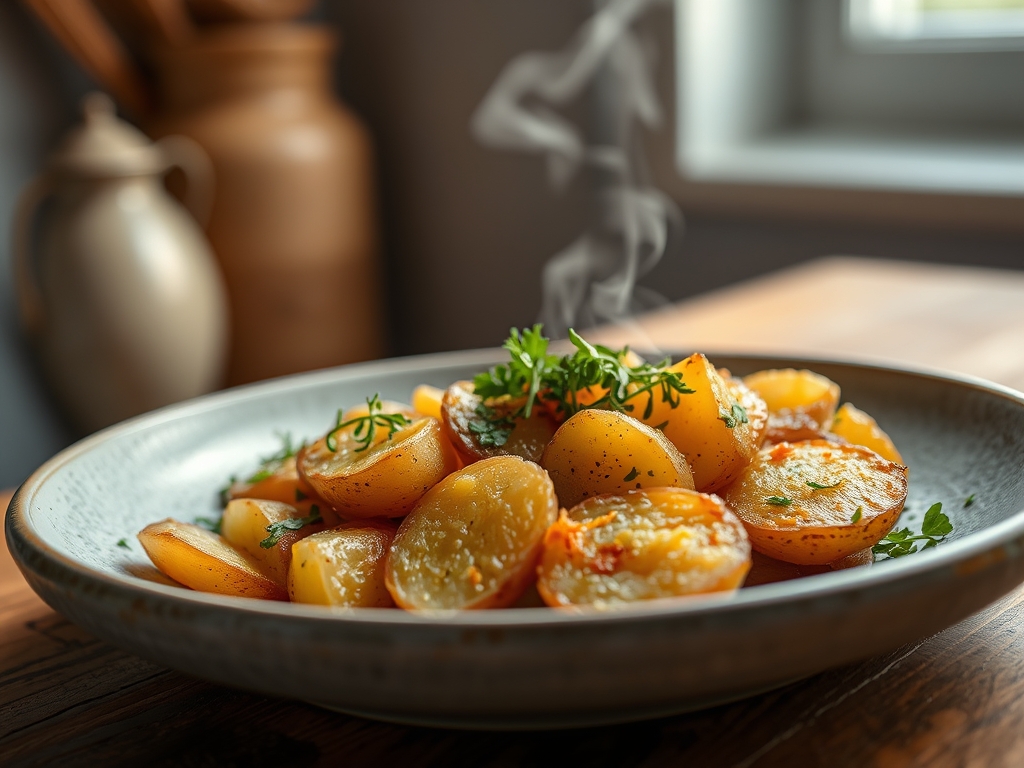
The scent of earth and rosemary fills the kitchen as the oven door swings open. Steam billows out, carrying the promise of a golden, shattered crust and a center as light as a summer cloud. If you think these tubers are just empty carbs, you are missing out on the ultimate canvas for healthy russet potato recipes. We are reclaiming the russet as a nutrient dense powerhouse.
Forget the heavy creams and deep fryers of the past. Today, we are using molecular precision to unlock the potato's potential without the caloric overhead. The russet potato is unique because of its high starch content; specifically, it is loaded with amylopectin. This makes it the perfect candidate for achieving that ethereal, fluffy texture that waxy potatoes simply cannot replicate. By mastering a few simple techniques, you can transform these humble roots into a gourmet meal that fuels your body and satisfies your soul. We are talking about fiber, potassium, and Vitamin C wrapped in a crispy, salty shell. Let us get to work.
The Gathers:
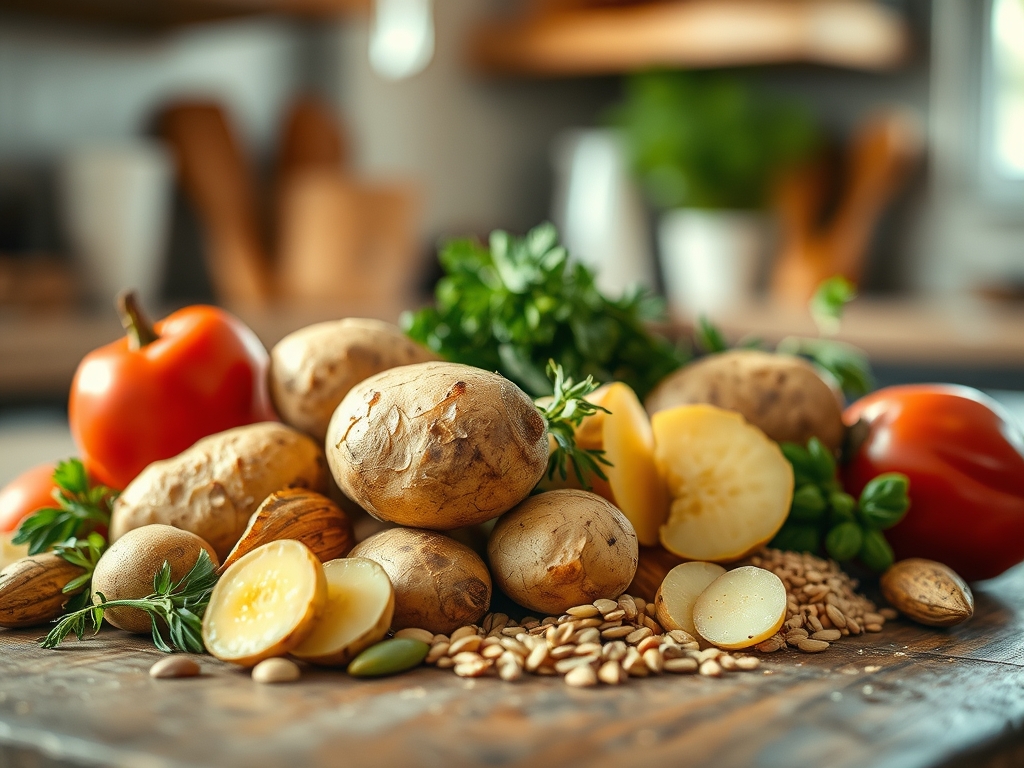
To execute these healthy russet potato recipes with professional finesse, your mise-en-place must be exact. Start with four large russet potatoes, roughly 300 grams each. Look for skins that are matte and free of "eyes" or green tint, which indicates the presence of solanine. You will also need high-quality extra virgin olive oil for its polyphenols and a high smoke point for roasting.
For the Smart Substitutions, swap heavy butter for Greek yogurt to add a viscous tang and a protein boost. Instead of table salt, use flaky sea salt to provide a textural contrast and a piquant finish. You will need a microplane to zest fresh garlic and lemon, ensuring the aromatics infuse the oil without burning. Grab your digital scale to ensure uniform sizing, which is the secret to even cooking. Finally, keep a bench scraper handy; it is the most underrated tool for moving diced potatoes from the cutting board to the pan without losing a single cube.
The Clock
Efficiency in the kitchen is about understanding the Chef's Flow. Total preparation time for these recipes is 15 minutes, while the active cooking time spans 45 minutes. The "flow" begins with the preheat. Never place potatoes in a cold oven; you need immediate heat to trigger the Maillard reaction.
While the oven reaches 425 degrees Fahrenheit, you perform your knife work. Use the first 10 minutes to scrub, dry, and dice. The middle 35 minutes are hands-off roasting time, which is your window to prepare a lean protein or a vibrant chimichurri. The final 5 minutes are for the "rest." Allowing the potatoes to sit for a moment allows for thermal carryover, ensuring the centers are fully steamed while the exterior hardens into a crisp shell.
The Masterclass
1. The Precision Prep
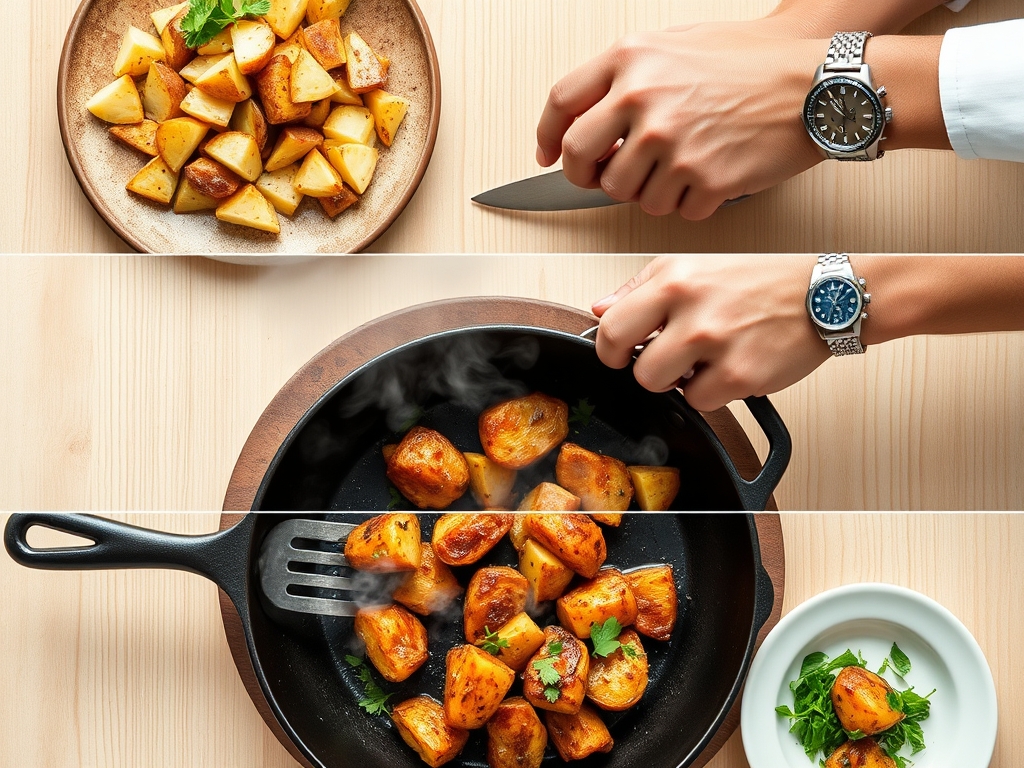
Wash your potatoes under cold running water and pat them bone-dry with a lint-free towel. Moisture is the enemy of crispness. Use a sharp chef's knife to cut them into uniform 1-inch cubes. Uniformity ensures that every piece reaches the ideal internal temperature simultaneously.
Pro Tip: This step prevents enzymatic browning. When you cut a potato, the polyphenol oxidase reacts with oxygen. If you aren't roasting immediately, submerge the cuts in cold water to create a barrier against oxidation.
2. The Parboil Secret
Place your cubes in a saucier filled with cold, salted water. Bring it to a boil and simmer for exactly five minutes. You want the edges to be soft but the structure to remain intact. Drain them and let them steam-dry in the hot pot for two minutes.
Pro Tip: This process creates a layer of "slurry" on the surface of the potato. When roasted, this starch-heavy layer dehydrates and fries, creating the ultimate crunch without the need for excessive oil.
3. The Aeration Toss
Transfer the potatoes to a large bowl. Drizzle with olive oil and your microplaned garlic. Use tongs or a large spoon to toss them vigorously. You want the edges to look slightly frayed or "fuzzy."
Pro Tip: To aerate the surface means to increase the surface area. Those tiny frayed bits of potato starch will crisp up in the oven, providing more "crunch real estate" per bite.
4. The High-Heat Roast
Spread the potatoes on a preheated heavy-duty baking sheet. Ensure they are in a single layer with space between them. If they are crowded, they will steam rather than roast. Roast at 425 degrees for 30 to 35 minutes, flipping once halfway through.
Pro Tip: Use a heavy-bottomed skillet or a dark baking sheet to maximize heat conduction. The dark surface absorbs more thermal energy, which helps render any remaining moisture out of the potato skin.
The Deep Dive
When we look at the Macro Nutrition of a medium russet, we find about 160 calories, 4 grams of protein, and 5 grams of fiber. By keeping the skins on, you retain the majority of the potassium, which is vital for heart health.
For Dietary Swaps, those following a Vegan protocol can use nutritional yeast for a cheesy, umami flavor. While potatoes are generally avoided on a strict Keto diet, those on a Targeted Keto plan can enjoy small portions post-workout to replenish glycogen. For a Gluten-Free crunch, toss the potatoes in a tablespoon of cornstarch or arrowroot powder before roasting.
The Fix-It: Common Pitfalls
- Soggy Potatoes: Usually caused by overcrowding the pan. The fix is to use two pans or a larger baking sheet to allow steam to escape.
- Burnt Garlic: If your garlic turns bitter, it was likely added too early. The fix is to add minced garlic in the last 10 minutes of roasting.
- Sticking to the Pan: This happens if you try to flip them too soon. The fix is patience; the potato will naturally "release" from the metal once the crust has formed.
For Meal Prep, reheating is a science. Avoid the microwave, which turns the starch gummy. Instead, use an air fryer at 350 degrees for 5 minutes. This rapidly re-dehydrates the surface, returning it to "day-one" quality.
The Wrap-Up
Mastering healthy russet potato recipes is like learning a secret language of texture and flavor. You have moved beyond the basic "baked potato" and stepped into the world of culinary science. By focusing on starch gelatinization and the Maillard reaction, you have created a dish that is as nutritious as it is delicious. Remember, the kitchen is your laboratory. Don't be afraid to experiment with different herbs or spices to make these recipes your own. You have the tools, the technique, and the "smarts" to make every meal a masterpiece.
The Kitchen Table
Can I make these recipes ahead of time?
Yes. Parboil and toss the potatoes in oil, then refrigerate for up to 24 hours. When ready to serve, roast them directly from the fridge. This actually enhances the crispness due to starch retrogradation.
Why are my roasted potatoes sticking to the pan?
Potatoes stick when the surface starch hasn't fully dehydrated into a crust. Ensure your pan is preheated and use enough oil. Wait for the potato to naturally release before attempting to flip with a spatula.
Is the potato skin actually healthy to eat?
Absolutely. The skin contains approximately half of the potato's total dietary fiber. It also houses the majority of the antioxidants and potassium. Just be sure to scrub the skin thoroughly to remove any residual soil.
What is the best oil for roasting russet potatoes?
Extra virgin olive oil or avocado oil are ideal. They offer healthy monounsaturated fats and have high enough smoke points to withstand the 425-degree heat required for a perfect, golden-brown exterior.