
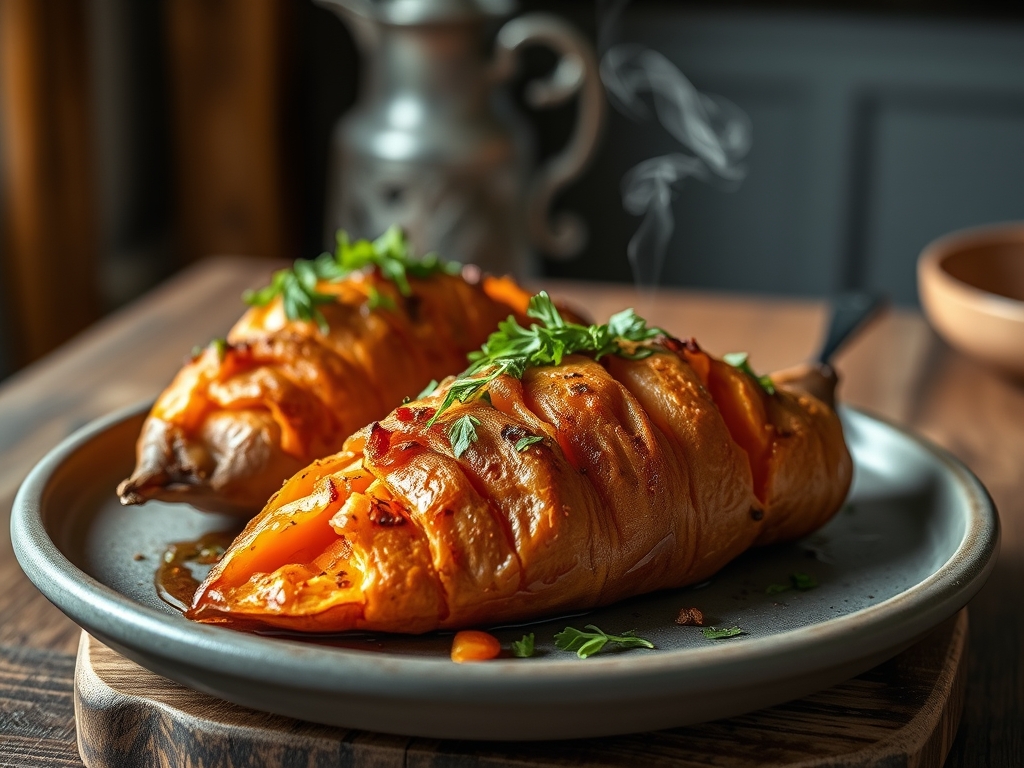
Picture a kitchen filled with the scent of caramelized sugar and earth; a fragrance so deep it feels like a warm hug for your senses. When you master whole roasted sweet potato recipes, you are not just cooking; you are conducting a symphony of molecular transformation that turns a humble tuber into a velvet masterpiece.
The magic lies in the slow conversion of starches into maltose. This process requires patience and precision to achieve that signature custardy interior and paper thin, blistered skin. Forget the days of watery, microwaved spuds. We are diving into the high science of heat to ensure every bite is a revelation of texture. Whether you are prepping for a week of healthy lunches or a decadent dinner party, these eight hacks will elevate your vegetable game to professional heights. We will explore how to manipulate moisture and sugar concentrations to create the ultimate comfort food. Grab your apron and your curiosity because we are about to turn your oven into a flavor laboratory.
The Gathers:
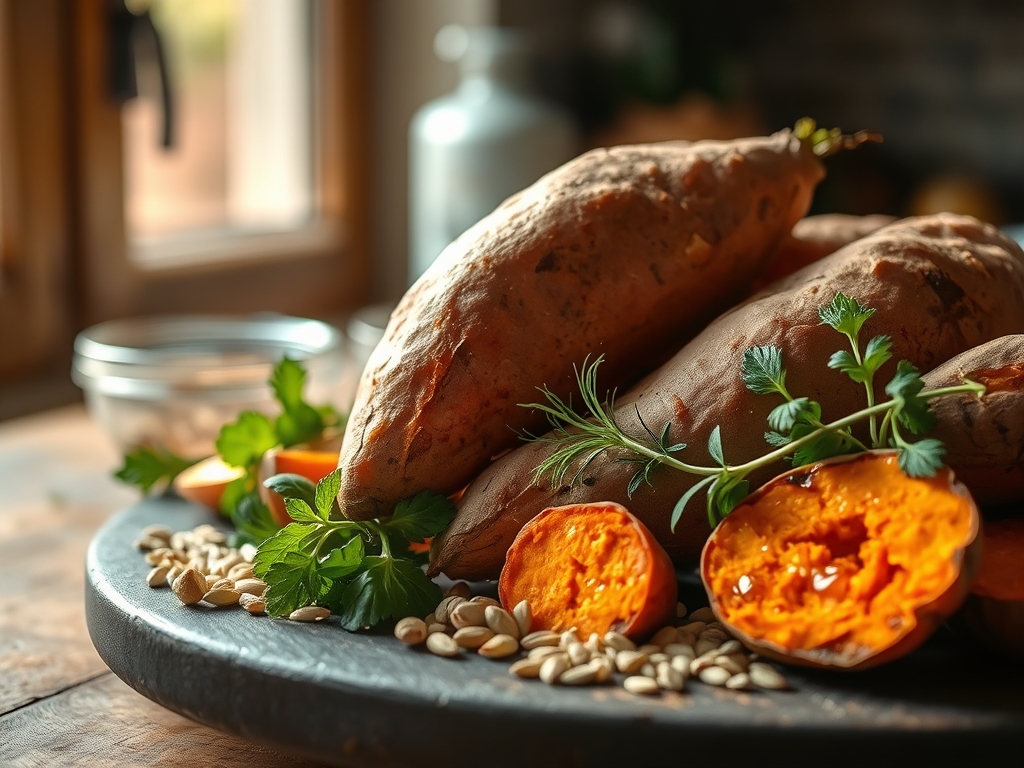
To begin our culinary experiment, we must assemble the right components. Start with medium sized Jewel or Beauregard sweet potatoes. These varieties possess the high moisture content necessary for a viscous interior. Use a digital scale to ensure your potatoes are roughly the same weight, which guarantees they cross the finish line at the same time. You will also need high quality fats; think grass fed butter or cold pressed avocado oil.
Salt is your most important chemical tool here. Use a flaky sea salt to provide a textural contrast against the soft flesh. For aromatics, gather fresh thyme sprigs and whole garlic cloves to infuse the oil. If you want to lean into the piquant side, keep some red pepper flakes or smoked paprika nearby.
Smart Substitutions: If you are avoiding nightshades or seeking a lower glycemic index, Japanese Yams (Satsumaimo) offer a chestnut like flavor and a denser crumb. For a vegan fat swap, refined coconut oil provides a neutral profile and a high smoke point that mimics the render of animal fats without the dairy.
The Clock: Timing the Transformation
Efficiency in the kitchen relies on what professionals call "Chef's Flow." The total time for these whole roasted sweet potato recipes usually clocks in at 60 to 75 minutes. Prep takes a mere five minutes; it is the oven that does the heavy lifting.
Set your oven to 425 degrees Fahrenheit. While it preheats, wash and dry your potatoes thoroughly. Moisture is the enemy of the Maillard reaction, so use a lint free kitchen towel to ensure the skins are bone dry. This "active" phase is short, but the "passive" roasting phase is where the enzymatic browning occurs. Plan to let the potatoes rest for at least ten minutes after they emerge from the heat. This allows the internal steam to redistribute, ensuring the center is moist rather than stringy.
The Masterclass:
1. The Perforation Protocol
Use a fork to prick the skin about six to eight times. This allows steam to escape, preventing the potato from exploding and creating small channels for salt to penetrate the surface.
Pro Tip: This prevents the internal pressure from rupturing the cellular walls too violently; maintaining the structural integrity of the skin while the inside becomes aerated and light.
2. The Oil Massage
Coat each potato in a thin layer of oil using your hands or a pastry brush. You want a glossy sheen, not a puddle.
Pro Tip: Fat acts as a heat conductor. By coating the skin, you ensure even thermal distribution, which helps the skin crisp up instead of becoming leathery through dehydration.
3. The Salt Crust
Sprinkle a generous amount of salt over the oiled skin. Place the potatoes directly on a wire rack set over a baking sheet to allow 360 degree airflow.
Pro Tip: This setup utilizes convection currents. Elevating the potato prevents the bottom from becoming soggy by allowing moisture to evaporate from all sides simultaneously.
4. The High Heat Roast
Slide the tray into the center of the oven. Rotate the pan halfway through the cooking time to account for any hot spots in your appliance.
Pro Tip: Consistent rotation ensures that the sugars caramelize evenly. If one side stays too close to the heating element, the sugars will carbonize and turn bitter before the center is cooked.
5. The Squeeze Test
At the 45 minute mark, use tongs to gently squeeze the sides of the potato. It should give easily under light pressure.
Pro Tip: This is a tactile check for the breakdown of pectin. When the cell walls collapse, the potato feels soft, signaling that the starches have fully gelatinized.
6. The Carryover Rest
Remove the potatoes and place them on a wooden board. Cover them loosely with foil for ten minutes.
Pro Tip: This utilizes thermal carryover. The internal temperature continues to rise slightly, finishing the cook without the harsh direct heat that could dry out the exterior.
7. The Precision Slice
Use a sharp paring knife or a bench scraper to make a clean vertical slit down the center. Avoid cutting all the way through the bottom skin.
Pro Tip: A clean cut prevents the loss of internal juices. If you tear the potato, you lose the concentrated maltose syrup that has gathered near the skin.
8. The Fluff and Infuse
Use a fork to gently mash the interior, then add a pat of butter or a drizzle of tahini. Use a microplane to zest some lime or grate fresh nutmeg over the top for a final flavor punch.
Pro Tip: Fluffing the potato introduces air, which changes the perceived density on the palate. This makes the dish feel richer and more indulgent without adding extra calories.
The Deep Dive:
Sweet potatoes are a nutritional powerhouse, packed with beta carotene, fiber, and potassium. One medium roasted potato offers about 100 calories and zero fat, making it a perfect canvas for healthy fats. For those on a Keto path, keep portions small or swap for roasted radishes. If you are Gluten Free, this is your ultimate bread replacement.
The Fix-It:
- Soggy Skin: Your oven temp was too low or you wrapped them in foil. Foil steams the potato; always roast "naked" for crisp results.
- Hard Centers: You likely chose a potato that was too large. If this happens, slice it in half and finish it face down in a heavy-bottomed skillet with a bit of water.
- Burnt Bottoms: This happens when sugars leak out. Use the wire rack method mentioned in the Masterclass to keep the potato away from the concentrated heat of the metal pan.
Meal Prep Science: To reheat, avoid the microwave. Use an air fryer at 350 degrees for five minutes. This reactivates the fats in the skin, restoring that "day-one" crunch while keeping the center lush.
The Wrap-Up:
You are now officially a master of the sweet potato universe. By understanding the balance of heat, moisture, and fat, you have turned a simple root vegetable into a gourmet experience. These whole roasted sweet potato recipes are versatile, nutritious, and undeniably delicious. Go forth and roast with confidence; your dinner table will thank you.
The Kitchen Table:
Do I need to wrap sweet potatoes in foil?
No, wrapping in foil traps steam and results in soggy, wet skin. For a toasted, caramelized exterior and a concentrated flavor, roast them uncovered directly on a rack or a parchment lined baking sheet.
What is the best temperature for roasting?
The sweet spot is 425 degrees Fahrenheit. This high heat triggers the Maillard reaction and caramelizes the natural sugars quickly while ensuring the interior reaches a creamy, custardy consistency without drying out the flesh.
How do I know when they are done?
The most reliable method is the squeeze test using tongs. The potato should feel soft and give easily. If you use a thermometer, the internal temperature should reach between 205 and 212 degrees Fahrenheit.
Can I eat the skin of a roasted sweet potato?
Absolutely. The skin contains significant fiber and nutrients. When roasted properly with oil and salt, it becomes crisp and flavorful; providing a necessary textural contrast to the soft, sweet interior of the vegetable.