
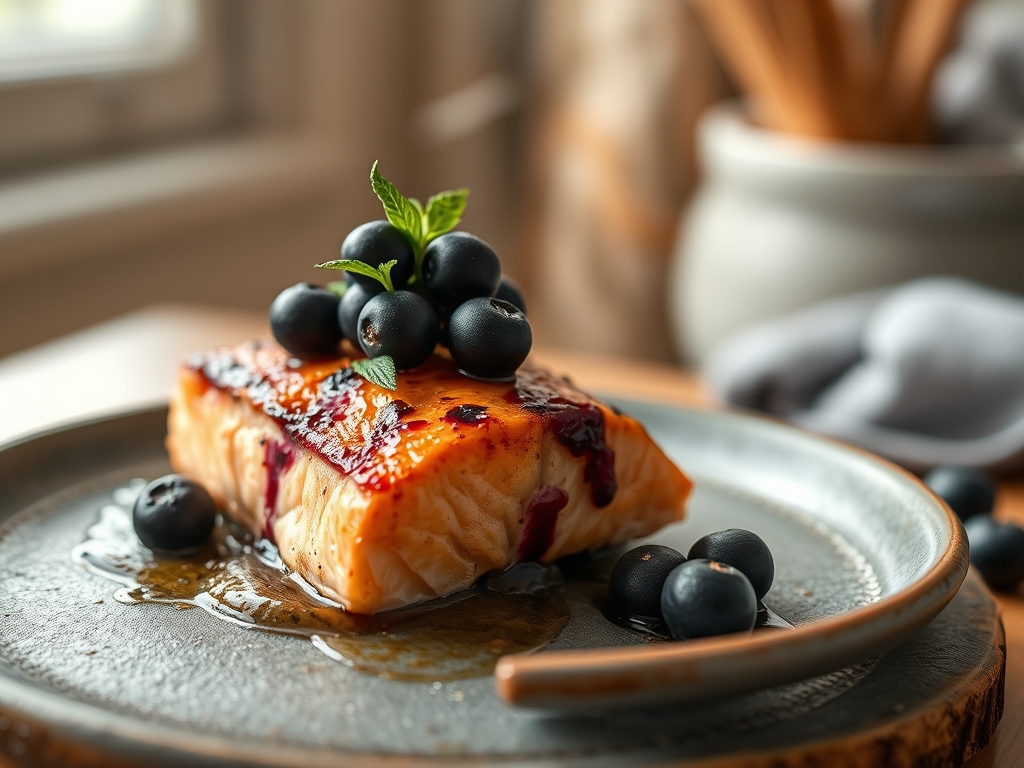
Imagine a heavy bottomed skillet sizzling on your stovetop as the scent of piney rosemary meets the sharp, sweet burst of ripening fruit. It is the kind of kitchen alchemy that makes your neighbors linger in the hallway just a second longer. We are diving into the world of blueberry salmon recipes; a culinary intersection where the fatty, buttery richness of Atlantic salmon meets the acidic, anthocyanin rich punch of summer berries. Most people think of blueberries as a muffin filler, but when they hit a hot pan with balsamic and garlic, they transform into a sophisticated, savory glaze. This dish is not just a meal; it is a masterclass in balancing the five basic tastes. We are going to achieve that perfect, glass like sear on the skin while keeping the interior translucent and flaky. Grab your apron and your favorite microplane. We are about to turn a standard Tuesday night dinner into a five star bistro experience using science, heat, and a little bit of purple magic.
The Gathers:
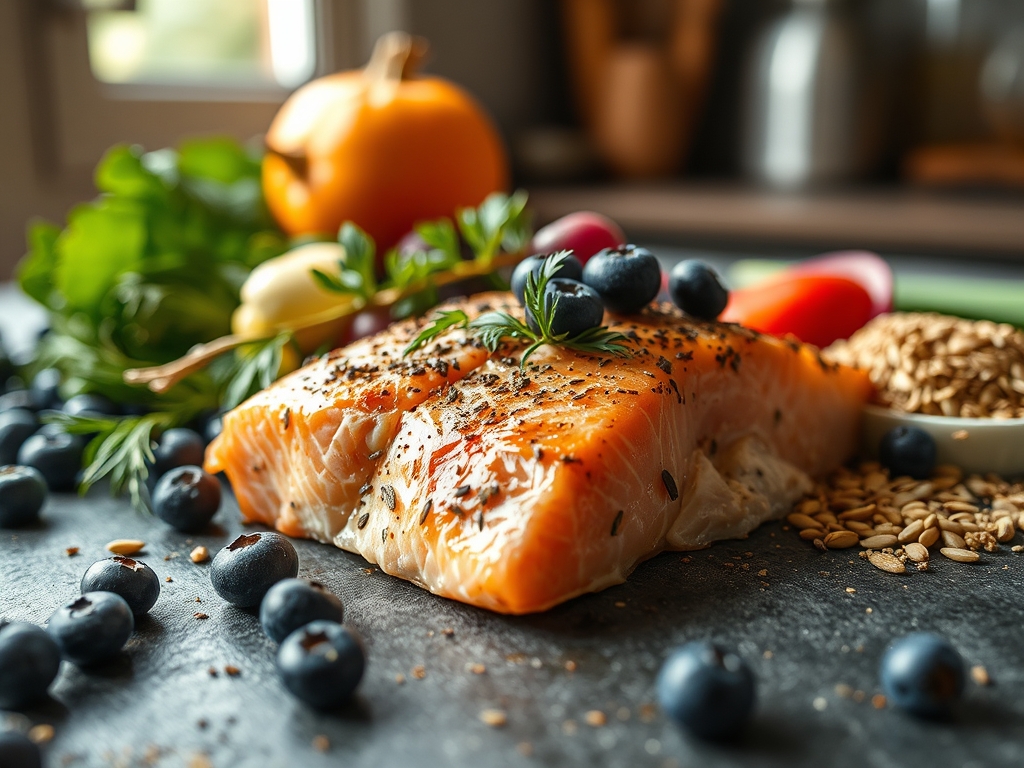
To master blueberry salmon recipes, your mise en place must be precise. Start with center cut salmon fillets, ideally weighing six ounces each. Look for vibrant, silver skin and firm flesh that bounces back when pressed. For the glaze, you need two cups of fresh blueberries. These berries contain pectin, a natural thickening agent that will create a viscous coating without the need for cornstarch. You will also need high quality balsamic vinegar, honey for caramelization, and fresh thyme for an earthy counterpoint.
Smart Substitutions: If you cannot find fresh berries, frozen ones work perfectly because the freezing process breaks down the cell walls, releasing juices faster during the reduction. If you are watching your sugar intake, swap the honey for a splash of maple syrup or even a monk fruit sweetener. For the fat, use avocado oil or Ghee. These have high smoke points, ensuring you do not fill your kitchen with acrid clouds when you are trying to achieve that perfect sear. Use a digital scale to measure your salmon portions; consistency in size ensures consistency in cook time.
The Clock
Efficiency in the kitchen is about the Chef's Flow. This entire process takes exactly 25 minutes. You will spend 10 minutes on prep, which includes washing the berries, mincing garlic with a sharp chef's knife, and patting your fish dry. The cooking phase takes 15 minutes. The glaze reduces simultaneously while the fish rests, ensuring everything reaches the plate at the peak of its temperature profile. Never rush the reduction; evaporation is your best friend when building deep, complex flavors.
The Masterclass
1. The Desiccation Ritual
Use a paper towel to press every drop of moisture off the salmon skin. Moisture is the enemy of the Maillard reaction. If the skin is wet, it will steam rather than crisp, resulting in a rubbery texture. Use a bench scraper to move your fillets cleanly from the cutting board to the pan.
Pro Tip: This is known as surface dehydration. By removing water, you allow the proteins and sugars on the surface to react immediately with the heat, creating a savory crust.
2. The Sizzle and Sear
Heat your heavy bottomed skillet over medium high heat until the oil shimmers. Lay the salmon skin side down. Use tongs to press the fillet down for the first 30 seconds to prevent the skin from curling. Leave it alone for five minutes.
Pro Tip: This prevents the contraction of connective tissues. By maintaining contact with the pan, you ensure even heat distribution across the entire surface area of the skin.
3. The Berry Breakdown
While the fish sears, toss your berries into a small saucier with balsamic and honey. Use a wooden spoon to burst a few berries, releasing their juices to act as a solvent for the honey.
Pro Tip: This is enzymatic browning in reverse. The heat breaks down the berry skins, while the acid in the vinegar stabilizes the bright purple pigments, preventing them from turning a dull grey.
4. The Deglaze and Infuse
Once the salmon is flipped, add a splash of white wine or broth to the pan to deglaze the brown bits (the fond). Pour your thickened blueberry mixture over the fish.
Pro Tip: Deglazing captures the concentrated proteins stuck to the pan, incorporating them back into the sauce for a deeper, more savory profile.
5. The Thermal Carryover
Remove the fish when the internal temperature hits 125 degrees Fahrenheit on a digital thermometer. Let it rest on a warm plate for three minutes.
Pro Tip: Thermal carryover will continue to cook the fish after it leaves the pan. Resting allows the muscle fibers to relax and reabsorb the juices, ensuring a moist bite.
The Deep Dive
From a macro perspective, blueberry salmon recipes are a powerhouse. A single serving provides roughly 35 grams of protein and is packed with Omega 3 fatty acids and antioxidants. For a Keto version, replace the honey with a erythritol based syrup. If you are Vegan, this glaze is incredible over a thick slab of roasted cauliflower or firm tofu.
The Fix-It:
- Skin Sticking: If the fish sticks, it is not ready to flip. The proteins will naturally release from the metal once the crust is formed.
- Broken Sauce: If your glaze looks oily, whisk in a teaspoon of water to re emulsify the fats and sugars.
- Burnt Berries: If the sauce reduces too quickly, move the pan off the heat immediately and add a squeeze of lemon juice to thin it out.
Meal Prep: To reheat, avoid the microwave. Use a low oven (275 degrees) with a splash of water in the dish, covered with foil. This creates a steam chamber that prevents the fish from becoming "fishy" or dry.
The Wrap-Up
You have officially mastered the art of the fruit and fish pairing. By understanding the science of the sear and the chemistry of the reduction, you have elevated a simple piece of protein into a culinary statement. This dish is vibrant, healthful, and undeniably impressive. Now, plate it up with some charred asparagus or a light quinoa salad, and get ready for the compliments to roll in. You are not just cooking; you are creating an experience.
The Kitchen Table
Can I use frozen salmon for this?
Yes, but thaw it completely in the refrigerator first. Pat it extremely dry with paper towels to remove excess moisture, which ensures you still get a crisp skin despite the previous freezing.
What if my glaze is too thin?
Continue to simmer the sauce in a saucier for an extra two minutes. The natural pectin in the blueberries will thicken the liquid as it reduces through evaporation, creating a syrupy consistency.
Is the salmon skin edible?
Absolutely. When seared correctly in a heavy bottomed skillet, the skin becomes a salty, crisp cracker. It contains the highest concentration of Omega 3 fatty acids in the entire fish.
How do I stop the berries from burning?
Keep the heat at a medium simmer rather than a rolling boil. If the sugars in the honey start to smell bitter, immediately deglaze the pan with a tablespoon of water or citrus juice.