
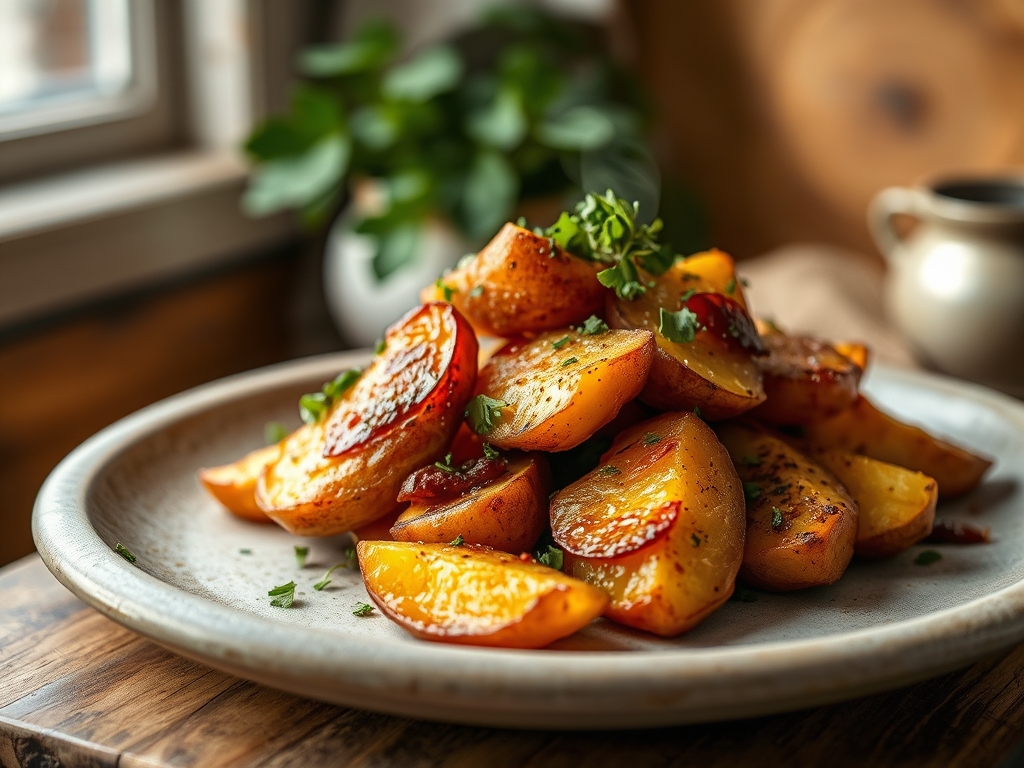
Imagine the sound of a structural fracture; that precise, crystalline snap that occurs when a perfectly dehydrated starch wall gives way to a cloud of steam. That is the holy grail of air fryer russet potato recipes. We are not just cooking dinner; we are engineering a textural masterpiece where the exterior mimics a glass-like shell while the interior remains as soft as a silk pillow.
The russet is our protagonist because of its high starch content. Unlike waxy red potatoes that hold their shape with stubborn moisture, the russet is essentially a bundle of amylose molecules waiting to be fluffed. When we introduce rapid convection heat, we are initiating a violent evaporation process that creates the ultimate crunch. Forget soggy, limp fries or lackluster baked spuds. We are diving into a world where the air fryer becomes a high-velocity convection kiln, turning humble tubers into golden, savory gold. Grab your apron and your favorite digital scale; we are about to turn your kitchen into a laboratory of deliciousness.
The Gathers:
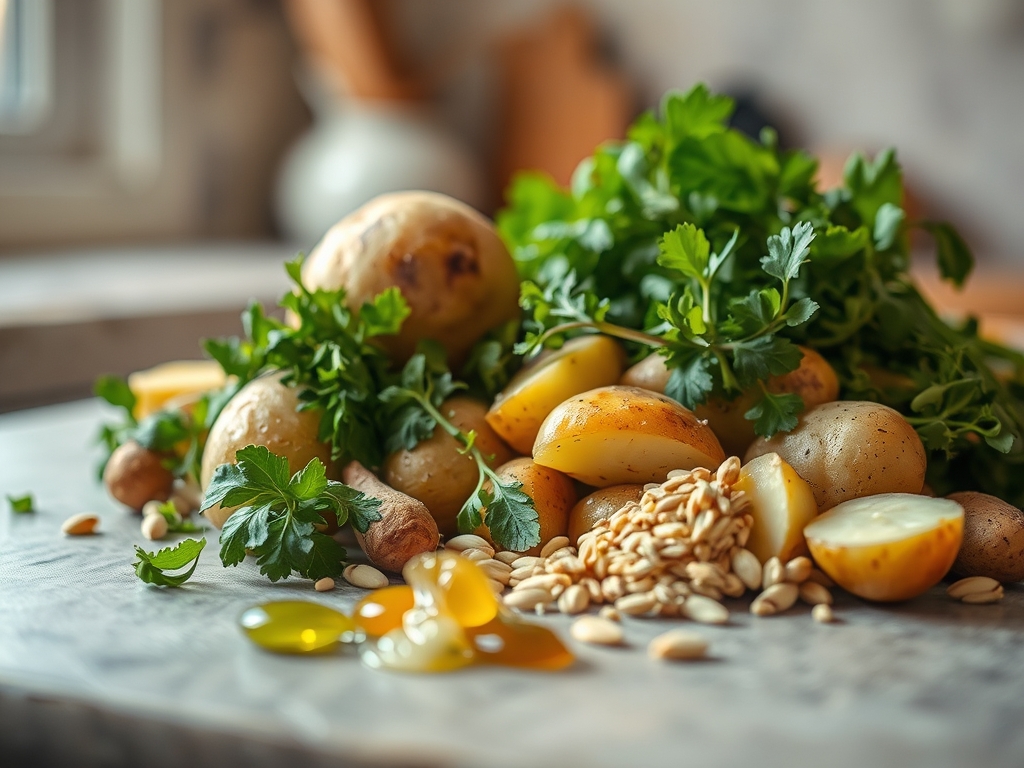
To achieve the perfect result, your mise-en-place must be exact. Start with three large russet potatoes, ideally weighing about 300 grams each. You will need high-smoke-point fats like avocado oil or rendered duck fat to ensure the Maillard reaction occurs without the oil breaking down into acrid compounds.
For the seasoning, use a fine-grain sea salt to ensure maximum surface area contact. You will also need a piquant kick from smoked paprika and a touch of garlic powder; avoid fresh garlic here as it will burn in the high-velocity air.
Smart Substitutions: If you are looking for a deeper umami profile, swap the salt for a dusting of nutritional yeast or finely grated parmesan applied via a microplane. For a vegan-friendly richness, refined coconut oil provides a viscous coating that mimics the mouthfeel of animal fats without the coconut flavor. Always use a bench scraper to move your chopped potatoes to avoid bruising the delicate starch cells you just exposed.
The Clock:
Efficiency in the kitchen is about the Chef's Flow. Your total active time is 15 minutes, with a total cook time of 25 to 30 minutes.
The flow begins with the soak; a non-negotiable step that takes 30 minutes but requires zero effort. While the potatoes soak, you preheat the air fryer. This ensures that the moment the starch hits the basket, the exterior begins to cauterize. By the time you are finishing your second cup of coffee or prepping a side salad, the potatoes are transitioning from the dehydration phase to the browning phase. Using a digital timer is essential; precision prevents the transition from golden brown to carbonized.
The Masterclass:
1. The Precision Cut
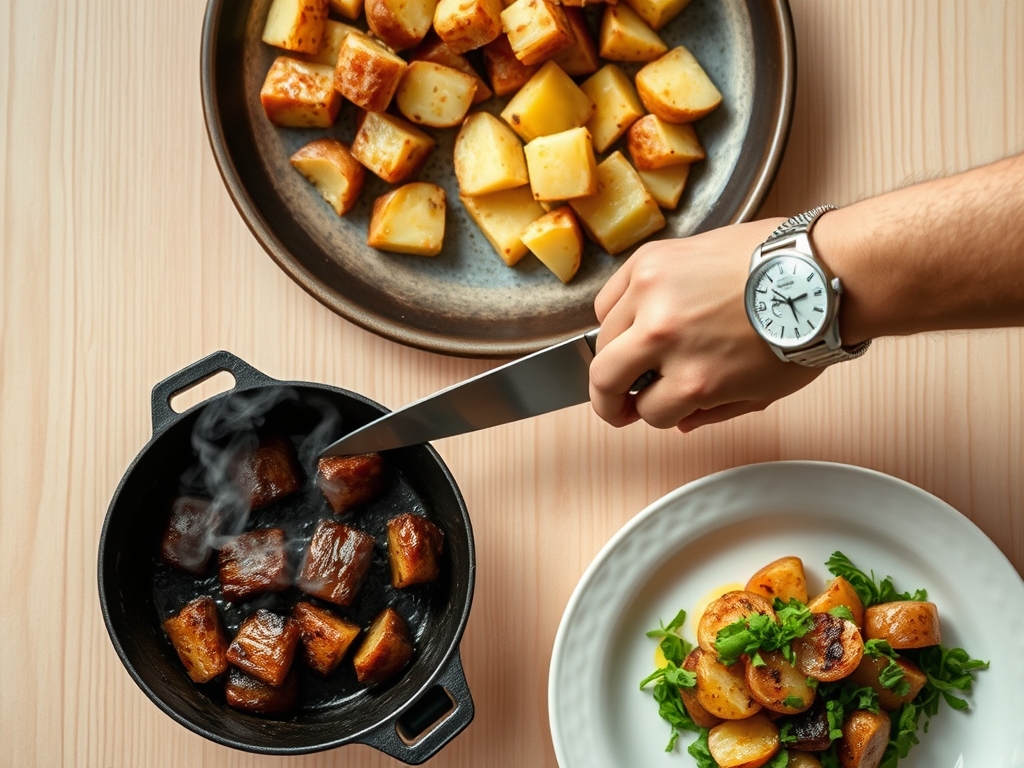
Use a sharp chef's knife to slice your russets into uniform sticks or cubes. Uniformity is not just for aesthetics; it ensures that every piece reaches the same internal temperature simultaneously.
Pro Tip: This prevents enzymatic browning. By cutting the potatoes into cold water, you rinse away excess surface starch and prevent the tyrosine in the potato from reacting with oxygen, which would otherwise turn your potatoes an unappetizing gray.
2. The Cold Water Bath
Submerge your cuts in a bowl of ice-cold water for at least 30 minutes. You will see the water become cloudy; this is the free starch leaving the building.
Pro Tip: Removing surface starch is the secret to the "glass" crunch. If left on, that starch would create a sticky, gummy layer that prevents the hot air from properly dehydrating the skin.
3. The Absolute Dry
After soaking, drain the potatoes and lay them on a lint-free kitchen towel. Use another towel to pat them until they are bone dry.
Pro Tip: Moisture is the enemy of the Maillard reaction. If the surface is wet, the air fryer must first spend energy evaporating that water (latent heat of vaporization) before it can start browning the potato.
4. The Fat Infusion
Place the dry potatoes in a large bowl and toss with your chosen oil and seasonings. Use your hands or tongs to ensure every millimeter is coated in a thin, viscous layer of fat.
Pro Tip: The oil acts as a heat conductor. It fills the microscopic crevices on the potato surface, ensuring that the convection heat is distributed evenly rather than just hitting the high points.
5. The Preheated Basket
Always preheat your air fryer for 5 minutes at 400 degrees Fahrenheit before adding the potatoes.
Pro Tip: This creates an immediate thermal shock. This shock causes the moisture inside the potato to turn to steam instantly, puffing up the internal structure while the outside sets.
6. The Single Layer Rule
Do not overcrowd the basket. The air needs to circulate around every single piece to aerate the surface.
Pro Tip: Overcrowding leads to "steaming" rather than "frying." If the pieces are touching, the moisture trapped between them cannot escape, resulting in soft spots.
7. The Mid-Point Agitation
Halfway through the cooking time, remove the basket and give it a vigorous shake.
Pro Tip: This redistributes the oil and ensures that any areas shielded from the air flow are now exposed. It also helps break any minor starch bonds that might have formed between touching pieces.
8. The Final Blast
For the last 3 minutes, increase the heat if your air fryer allows, or simply keep a close eye on the color. You are looking for a deep, mahogany gold.
Pro Tip: This final stage is where the most complex flavor compounds develop. The sugars and amino acids are fusing to create hundreds of new flavor molecules.
9. The Rest and Season
Once removed, let the potatoes rest for 2 minutes on a wire rack.
Pro Tip: This allows for thermal carryover. The internal steam redistributes slightly, preventing the exterior from becoming soggy from the inside out while the crust firms up.
The Deep Dive:
From a macro perspective, russet potatoes are a powerhouse of complex carbohydrates and potassium. One medium potato provides about 160 calories, 4 grams of protein, and zero fat (until we add our own). For those on a Keto journey, this recipe is a "cheat day" favorite, but for those following a Vegan or GF lifestyle, it is a staple.
The Fix-It:
- Soggy Results: You skipped the drying step. Next time, use a hair dryer on the "cool" setting if you are in a rush to ensure the potatoes are bone dry.
- Burnt Edges, Raw Middle: Your temperature is too high. Drop it by 25 degrees and increase the time to allow the heat to penetrate the center.
- Bland Flavor: You seasoned after cooking. Always toss with salt and spices before air frying so the flavors can infuse into the crust.
Meal Prep: To reheat and achieve "day-one" quality, never use a microwave. Put the leftovers back into the air fryer at 375 degrees for 4 minutes. This re-activates the fats and recrisps the starch walls through rapid dehydration.
The Wrap-Up:
You are now armed with the molecular secrets to the perfect air fryer russet potato. By mastering the balance of starch removal, moisture control, and thermal shock, you have elevated a simple root vegetable into a culinary event. Go forth, grab your tongs, and let the crunch be heard across the neighborhood!
The Kitchen Table:
Why are my air fryer potatoes not crispy?
The primary culprit is excess moisture. If the potatoes are not perfectly dry before adding oil, they will steam instead of fry. Additionally, overcrowding the basket prevents the hot air from circulating and dehydrating the potato surface effectively.
Do I really need to soak the potatoes?
Yes. Soaking removes excess surface starch that causes potatoes to stick together and turn gummy. This process ensures the exterior can form a rigid, crispy shell while the interior remains light and fluffy during the high-heat convection process.
What is the best oil for air frying russets?
Use oils with a high smoke point, such as avocado oil, light olive oil, or grapeseed oil. These fats can withstand the 400 degree heat without breaking down or producing bitter, off-flavors during the cooking cycle.
Can I use this method for other potatoes?
While you can, russets are best for "fluffy and crunchy" results due to their high starch content. Waxy potatoes like Red Bliss or Yukon Gold will be creamier but will never achieve the same crystalline crunch as a russet.